Showing posts with label Resonance Machines. Show all posts

“The East” and Corporate Terrorism

William E. Connolly
Author of The Fragility of Things: self-organizing processes, neoliberal fantasies, democratic activism, Duke, fall, 2013

As I compose this I am sitting on a gorge in Ithaca, New York, a gorge formed over endless centuries by the loud, cascading falls situated at one end of it. I sit here the day after seeing “The East,” a May, 2013 film on corporate eco-terrorism, private intelligence firms that secure them, and the closeted eco-warriors who stalk both by adopting parallel tactics. The title is meant to recall the underside of the privileges bestowed upon the corporate east in America and the mess in the middle east today. But the geological resonance is also pertinent because some geologists contend that the Biblical story of Eden, situated in “the middle east” 6000 years ago, is actually a mythic condensation of faint memories passed down to later generations of a bygone era when an area stretching from the Arabian peninsula to the current Sahara had been a vibrant, fertile, green zone. Over a short period a radical change in climate transformed it into a desert. There are even remains of a sophisticated structure reminiscent of Stonehenge through which the leading intellects of the day tried to figure out what in hell was happening to their climate and world. 
The condensation of that climate event in Genesis, at least as interpreted by Augustine, is one in which the first humans in the garden rebelled against God and we were all punished severely for their rebellion: labor in child birth thereafter for women, toiling in barren fields for men, and the experience of death for all. Climate change, human willfulness and divine punishment. The story is often used as a lesson in obedience, but also lurking in it, especially in the earliest J version, is a sense of powerful natural forces  which we must tend as best we can. The Book of Job puts both stories into play too. Here is a somewhat different story: The first humans did not deserve what they got; we may deserve what we are sowing; future generations may reap the effects of our original sin.
“The East” is directed by Zal Batmangli and stars Brit Marling (who also co-wrote it). It co-stars Ellen Page and Shiloh Fernandez. Sarah works for a spooky corporate intelligence and undercover agency that infiltrates and breaks up eco-warrior groups. Our heroine is assigned to infiltrate an undercover group devoted to locating corporate eco-terrorism and enacting “jams” to make them experience precisely what their policies do to others. Does you pharmaceutical company produce a medication that creates severe mental dissociation? Do you then deny it?  Let’s infiltrate the company celebration and pour the same medication into their drinks. Does your manufacturing company pour toxic wastes into the river at a precise time every night? Let’s capture the bosses and compel them to swim in the river just as the toxic brew gushes out of the huge pipe above them.
Reviews of the film so far often ask whether the suspense works well and whether the infiltration strategy is realistic. Demote those questions. The key thing is that Sarah soon becomes a double agent, not in the sense of playing both sides against the middle for her own gain. But in the sense of finding that part of her comes to identify with the goals and practices of the eco-warrior group and that part clings to the cool, more cynical analyst loyal to the firm. Also, part of her is mesmerized by the warrior tactics—who would not feel a thrill as you see those corporate cads swim in the slime they have brewed?—and part of her is drawn to bring the cool, technical knowledge and tactics she has learned at the firm to a new cause. She is a doubly identified agent. In this way she captures the predicament many of us are caught in today. We are appalled by corporate eco-terrorism; we find our responses to it to be inadequate; we fear for ourselves and families when we consider other options; and we don’t want to become as dogmatic and punitive from our side as the corporate terrorists are. We think that the latter approach will backfire. And yet we are dissatisfied with our current modes of double agency. 
Eventually Sarah develops a strategy of public expose and activism that draws some sustenance from her two identities and resists the traps each sets for her. I will let that part unfold when you watch the film. Is it enough?  Probably not. Could more of us participate in such acts to augment the potential they hold? Yes, we could. Many of us are what Michel Foucault called “specific intellectuals”, people with special knowledges and skills because of the work we do in law firms, medical practices, college teaching, blog writing, pharmaceutical companies, intelligence agencies, the media, school boards, churches, geological research, corporate regulatory agencies, and so on, endlessly. Each of us has specific modes of strategic information and critical skill linked to our role assignments. We can expose horrendous practices, as Snowden has done recently. We can also support others who do so as we seek to build a critical assemblage of public insurrection together. 
Sarah provides a metaphor and exemplar for our time. Those two innocent children in the fertile garden did not deserve the fate imposed upon them. They therefore suffered a double injury: the fate and their sense of deserving it. And we today? We either contribute to the fate that will befall us or withdraw from fights against corporate eco-terrorism. The next generation will not deserve the fate bestowed upon it, but we are saddled with differential degrees of responsibility. I have explored multimodal kinds of action to be pursued under such circumstances in a recent post on “The Dilemma of Electoral Politics”.  The cool Sarah does much more. She acts in ways that inspire us to think and act differently.
What about the warrior clan she infiltrates? To me, they simultaneously inform us, slide too close the adversaries they oppose, and pursue some actions that are apt to backfire under the glare of publicity. Are they, though, also invaluable prods? Yes. They are, perhaps, the Antigones, Nat Turners and John Browns of today. They force us to rethink, with Sarah, how we remain caught in oh so carefully crafted circles of self-protective pessimism, or cynicism, or innocence, or indifference. They spur us on. They press us to consider again just what mix of courage and tactical wisdom are appropriate to the fateful issues of today. We need the intensity they exhibit joined to multimodal critical practices, ranging from role experimentations through exposes to social movements and electoral politics—each of these enacted as an indispensable contribution to the others. Check out the film. Exacerbate, in the company of others, the double agent circling within you.

The Dilemma of Electoral Politics


William E. Connolly
Connolly's forthcoming book is entitled The Fragility of Things: self-organizing processes, neoliberal fantasies, democratic activism.

The dangers posed by climate change and potential shifts in the ocean conveyor system; the extensive suffering generated by the heightening of economic inequality; the need to restructure the state supported infrastructure of consumption so that all residents can participate in the housing, travel, health care, retirement and educational institutions it makes available; the need to support the pluralization of gender practices, religious membership, and ethnic identifications; the desperate needs of our cities and the ugly politics of apartheid designed to isolate them---these interlocking issues constitute commanding problems of our time. The fact is, however, that they are not addressed within the established terms of the electoral system.  Does that mean that we should withdraw from electoral politics? Or wait for a revolution that eschews “reformist” politics until capitalism is liquidated, as some critics of the Occupy movement have asserted? I know too many people suffering in the working class to sanction either response. I read about too many others under duress as well.
There is, nonetheless, a dilemma of electoral politics confronting the Left: 1) It is tempting to forgo electoral politics because it is so dysfunctional. But to do so cedes even more power both to independent corporate action and to the radical right within the state. The right loves to make electoral politics dysfunctional so that people lose confidence in it and transfer confidence to the private sector. (2) Nonetheless, the logic of the media-electoral-corporate system does spawn a restrictive grid of power and electoral intelligibility that makes it difficult to think, experiment, and organize outside its parameters. Think of how corporations and financial institutions initiate actions in the private sector and then use intensive lobbying to veto efforts to reverse those initiatives in Congress or the courts, just as financial elites invented derivatives and then lobbied intensively to stop their regulation; think of how media talking heads concentrate on candidates rather than fundamental issues; recall the central role of scandal in the media and electoral politics; consider the decisive electoral position of inattentive “undecided voters”; note how states under Republican rule work relentlessly to reduce the minority and poor vote; recall those billionaire super pacs; and so on. The electoral grid cannot be ignored or ceded to the right, but it also sucks experimental pursuits and bold ventures out of politics. Can we renegotiate the dilemma of electoral politics? That is the problematic within which I am working. I do not have a perfect response to it. Perfect answers are suspect.
Perhaps it is wise to forge multimodal strategies that start outside the electoral grid and then return to it as one venue among others. Strategic role experimentations at multiple sites joined to the activation of new social movements provide possibilities. Indeed, these two modes are related. Consider merely a few examples of role experimentation tied to climate change and consumption available to many people in the shrinking middle class. We may support the farm-to-table movement in the restaurants we visit; we may participate in the slow food movement; we may frequent stores that offer food based on sustainable processes; we may buy hybrid cars, or, if feasible, join an urban zip-car collective, explaining to friends, family, and neighbors the effects such choices could have on late modern ecology if a majority of the populace did so; we may press our workplace to install solar panels and consider them ourselves if we can afford to do so; we may use writing and media skills to write graffiti, or produce provocative artistic installations, or write for a blog; we may shift a large portion of our retirement accounts into investments that support sustainable energy, withdrawing from aggressive investments that presuppose unsustainable growth or threaten economic collapse; we may bring new issues and visitors to our churches, temples, or mosques to support rethinking interdenominational issues and the contemporary fragility of things; we may found, join, or frequent repair clubs, at which volunteers collect and repair old appliances, furniture, and bikes to cut back on urban waste, to make them available to low income people and to increase the longevity of the items; we may probe and publicize the multimodal tactics by which twenty-four-hour news stations work on the visceral register of viewers, as we explain on blogs how to counter those techniques; we may travel to places where unconscious American assumptions about world entitlement are challenged on a regular basis; we may augment the pattern of films and artistic exhibits we visit to stretch our habitual powers of perception and to challenge some affect-imbued prejudgments embedded in them. A series of intercalated role experiments, often pursued by clusters of participants together.
But don’t such activities merely make the participants “feel better”?  Well, many who pursue such experiments do feel good about them, particularly those who accept a tragic image of possibility in which there is no inevitability that either large scale politics, God, or nature will come to our rescue. Also, could such role experiments ever make a sufficient difference on their own? No. These, however, may be the wrong questions to pose. What such experiments can do as they expand is to crack the ice in and around us. First, we may now find ourselves a bit less implicated in the practices and policies that are sources of the problems. Second, the shaky perceptions, feelings, and beliefs that authorized them may thus now become more entrenched as we act upon them. Third, we now find ourselves in more favorable positions to forge connections with larger constituencies pursuing similar experiments. Fourth, we may thus become more inspired to seed and join macropolitical movements that speak to these issues. Fifth, as we now participate in protests, slowdowns, work “according to rule” and more confrontational meetings with corporate managers, church leaders, union officials, university officers, and neighborhood leaders, we may become even more alert to the creeds, institutional pressures and options that propel these constituencies too. They, too, are both enmeshed in a web of roles and more than mere role bearers. Many will maintain an intransigence of viewpoint and insistence of interpretation that we may now be in a better position to counter by words and deeds with those outside or at the edge of the intransigent community.
One advantage of forging links between role experimentations and social movements is that both speak to a time in which the drive to significant change must be pursued by a large, pluralist assemblage rather than by any single class or other core constituency. Such an assemblage must today be primed and loaded by several constituencies in diverse ways at numerous sites. 
It is necessary here to condense linkages that may unfold. But perhaps movement back and forth between role experiments, social movements, occasional shifts in the priorities of some strategic institutions, and a discernible shift in the contours of electoral politics will promote the emergence of a new, more activist pluralist assemblage. Now, say, a new, surprising event occurs. Some such event or crisis is surely bound to erupt: an urban uprising, a destructive storm, a wild executive overreach, a wide spread interruption in electrical service, a bank melt down, a crisis in oil supply, etc. Perhaps the conjunction of this new event with the preparatory actions that preceded it will prime a large constellation to resist the protofascist responses the intransigent Right will pursue at that very moment.  Perhaps the event will now become an occasion to mobilize large scale, intensive support for progressive change on some of the fronts noted at the start of this piece. It is important to remember that the advent of a crisis does not alone determine the response to it. So waiting for the next one to occur is not enough. The Great Depression was followed by the intensification of fascist movements in several countries. Those with strong labor movements and progressive elected leaders proved best at resisting them. The most recent economic melt-down was met in many places by the self-defeating response of austerity, and worse. That is why the quality and depth of the political ethos preceding such events is important.
The use of the “perhaps” in the above formulations suggests that there are no guarantees at any of these junctures. Uncertainties abound. These points, however, also apply to any radical perspective that counsels waiting for the revolution, as it surrounds its critiques of militant reform with an aura of certainty. Today the need is to curtail the aura of certainty of all perspectives on the Left. The examples posed here, of course, are focused on primarily one constituency. But others could be invoked. The larger idea is to draw energy from multiple sources and constituencies.  The formula is to move back and forth between the proliferation of role experiments, forging social movements on several fronts, helping to shift the constituency weight of the heavy electoral machinery now in place, and participating in cross-country citizen movements that put pressure on states, corporations, churches, universities and unions from inside and outside simultaneously. Indeed, perhaps the severity of the issues facing us means that we should prepare for the day when we are strong enough in several countries to launch a cross-country general strike.   
The proliferating approach adopted here, again, is replete with uncertain connections. That’s politics. The point is to resist falling into the familiar game of optimism vs. pessimism and to minimize that tempting blame-game within the Left, folding more attraction and inspiration into our activities. The point is to appraise the severity of the needs of the day and to attract people to join in different ways and degrees a multifaceted movement to respond to them. 

The Not So Innocent Right to Free Speech

Lars Tønder
  Northwestern University

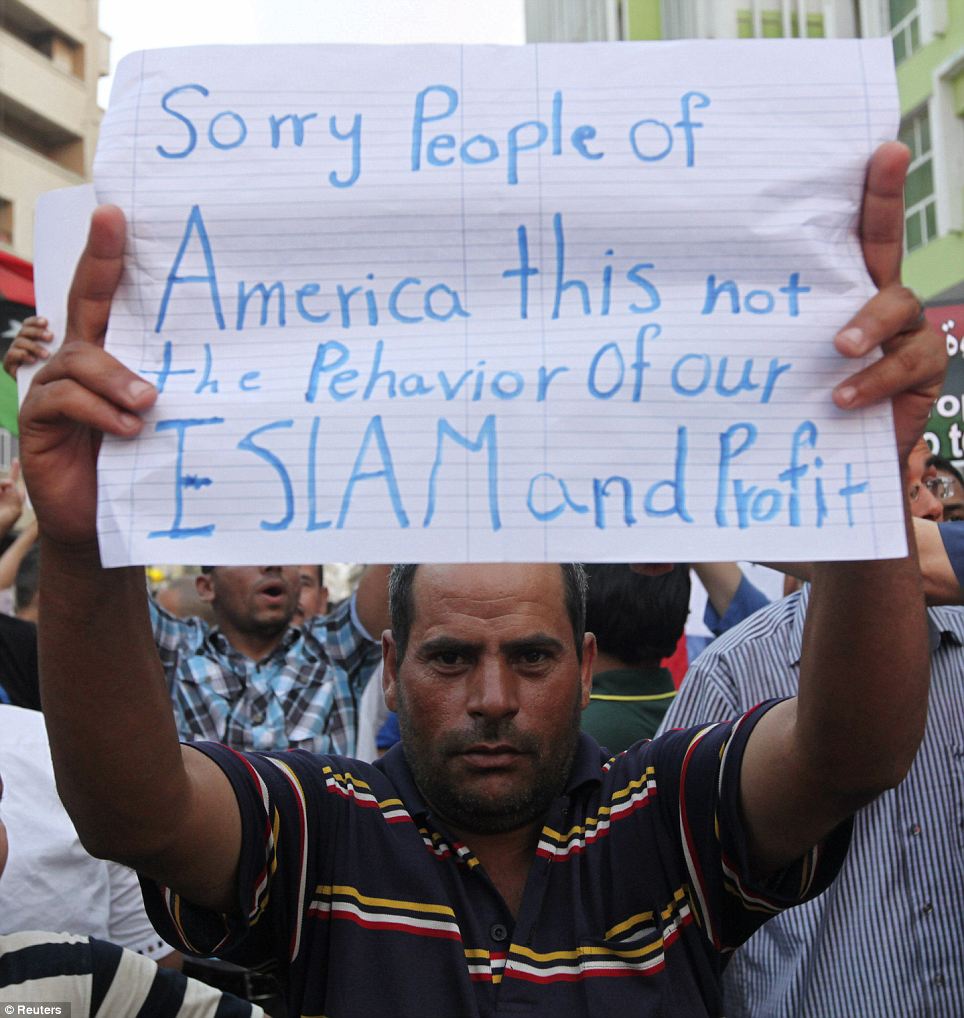
A new “Muhammad crisis” is unfolding before our eyes. Provoked by the movie “Innocence of Muslims,” and enforced by recent developments in the US, the Middle East, North Africa, and elsewhere, the crisis evolves around a familiar pattern of arguments and objections, which trouble our established ways of invoking and defending the right to free speech. Like the many other crises that preceded it, the current “Muhammad crisis” signifies a challenge, not only to ideals of democratic deliberation, but also to how we perceive and engage the world of power and politics.
  To see how complex and challenging the current Muhammad crisis is, one only has to consider the mix of ingredients that provoked it: A California-based film producer who previously had worked on adult movies such as “Young Lady Chatterley” and “The Sexpert”; a self-proclaimed movie director who spent most of the year before the film was shot in federal custody on bank fraud charges; an Evangelic pastor in Florida infatuated by publicity and the desire to save Muslims from their own faith; a new fragile government in Libya threatened by remainders of Al Queda’s terrorist network; a growing disappointment with the Arab spring and the lack of democracy in Egypt and elsewhere; the ongoing killing of innocent civilians by US-directed drones in Pakistan and Afghanistan; and, finally, a good deal of unsettled resentment from earlier conflicts such as the Danish cartoon war. Exceeding our usual models of efficient causality, these ingredients are connected through affective resonances and symbolic equivalences that produce an event like one we are witnessing today: An event where history is covered over by an explosive present, and where the criterion of judgment lies in the future—not in the past.
The complexity of the event helps to explain why the prevailing response among proponents of Western democracy has been insufficient and, perhaps more importantly, why it appears to be dangerously self-defeating. Promoted by a global coalition that includes such unusual bedfellows as Mitt Romney, Salman Rushdie, and the French magazine Charlie Hebdo, the response among proponents of Western democracy has been threefold: eliminate any doubt about the right to free speech; depict anyone who don’t share this view as weaklings who at least tacitly accept the use of violence; and, in the spirit of what John Durham Peters, in Courting the Abyss, calls “homeopathic machismo,” proceed by ignoring, repeating, or deepening the original offense (or some combination thereof). Like the parsimonious observer who looks for the parts rather than the whole, the prevailing response promises to reduce the complexity of the world so as to identify the only truth there is to see—that the best way to invoke and defend free speech is to stand steadfast and, if necessary, to up the ante whenever criticized or challenged. As Rushdie explains it in a recent interview about the link between the publication of the Satanic Verses and the current Muhammad crisis: “If you are standing up for important principles…as I have learned the hard way…you don’t defend those principles by compromise or appeasement. In the end, you just simply have to defend them and take the consequences…I’m just going to fight my corner” 
It is hard not to notice here a desire for sovereignty, which, despite Rushdie’s subtle use of language in many of his novels, puts him in close proximity to Mitt Romney and others who have criticized the Obama administration for trying to counter the initial reactions to the “Innocence of Muslims” movie by objecting to the movie’s depiction of Islam. One reason to resist this response by Rushdie, Romney, and others is the absence of a resilient openness to difference as well as the antagonistic violence it inflicts against the purpose of free speech—to expand the range of utterances and to allow more voices to be heard. Another reason to resist the response is the tendency to disavow fundamental changes in the contemporary conditions of free speech. Contrary to the complexity already noted, the response among the proponents of Western democracy posits a center of power (the State or the individual), which places itself above the lived experiences of its subjects or parts, and which claims to have the authority needed to protect itself from contestation and revision. In a complex world like the one characterizing the current Muhammad crisis, such a power center does not exist in any meaningful way. Not only must the United States and other governments compete with a multitude of non-state agents, the connections between the different agents (state and non-state) now develop at an accelerated pace, which exceeds the control of just one center of power. The complexity, we might say, changes the context of free speech, and therefore also the means appropriate for invoking and defending it. Might the tendency to gloss over this shift not explain why the “sovereigntists” seem either tone deaf with regard to various uses of free speech, or guilty of furthering the violence that they accuse Muslims around the world of committing?
None of this is to say that we, as political theorists and as members of different democratic regimes, should not embrace the right to free speech, or that we should refrain from criticizing the “Innocence of Muslims” movie and the violent responses it has provoked. What the changes in the context of free speech do suggest, however, is that we need a different framework for perceiving and engaging conflicts like the current Muhammad crisis. Rather than appealing to a sovereign desire which pretends to be detached from the event it regulates, and in which it remains entangled, the challenge now is to study conflicts like the current Muhammad crisis so as to better counter and pluralize the various lived experiences embedded in it.
A first step in this direction might be to actually watch and criticize the parts of the “Innocence of Muslims” movie that have been released on line as the movie’s trailer. (As it was the case with the Danish cartoons of the Prophet Muhammad, the tendency in public discourse has so far been to state a general opinion with regard to the legality of the movie, and to relegate to the unexamined background questions about how the movie works symbolically as well as affectively.) As anyone who has looked it up on YouTube will know, watching the trailer can be both excruciatingly painful and tragically funny: The visual effects are amateurish, the acting is horrible, and the narrative is either absent or clumsy. Still, the movie does manage to stir its audience, not only because it takes up a controversial issue, but also because it evokes affective resonances and symbolic equivalences that create an effect similar to the “mirror neurons” detected by researchers in cognitive neuroscience and cognitive psychology. Since it is at this level that the complexity is subtlest, it may also be here that our critical efforts are most productively spent.
A particularly telling sequence in the movie includes a set of scenes which show the young Prophet as a fatherless “bastard,” who submits himself to female desire, and thereby gradually learns the false lesson of deriving pleasure from dominating others: “killing the men and capturing the women.” What kind of resonances and equivalences subsist below the simplicity of this statement? The first thing to note is how the affects evoked by the statement are not unlike Christianity’s own fear of female desire, something that historically has justified the domestication of women’s sex life through misogyny and repression. A reminder of this historical fact surfaced only a few days after the YouTube video had gone viral, when Karen King, a historian of early Christianity at Harvard Divinity School, reported the finding of a papyrus fragment from the 2nd century whose mentioning of “Jesus’ wife” appears to challenge Christianity’s more orthodox view of marriage, sexuality, reproduction, and family life. Like the “Innocence of Muslims” movie, the papyrus fragment was quickly perceived as a challenge to the secure grasp of a religious orthodoxy. Unlike the movie, however, the fragment entered into a different kind of circulation, one that was defined, not by the cheesiness of an incendiary joke, but by the claim to high culture and scholarly work. Because of this difference in circulation, the papyrus fragment appears easier to domesticate and contain, even if it represents a past historicity that, unlike the manufactured one invoked by the “Innocence of Muslims” movie, has the potential to alter the basic presuppositions of a religion.
The fact that the “Innocence of Muslims” movie’s manufactured historicity has come to seem politically relevant is a testimony to the movie’s powerful linkaging of affective resonances and symbolic equivalences. The movie’s political relevancy increaces furthermore if we pay close attention to how the movie, by erotizing the fear of difference, depicting the Prophet as an illustrious sex-maniac who only wants to dominate others, fuels the violent aggressions it pretends to refute. Not unlike a self-fulfilling prophecy, the movie puts the effect before the cause, and thus evokes a mirroring whereby “my” fears become “yours” (and vice-versa), undoing the hopefulness of the Arab spring, stirring up the mob in a more predictable manner than the one we witnessed a little more than a year ago on Tahrir Square in Cairo. The mirroring works, we might say, because the movie’s branding simultaneously reduces the range of possibilities to two antagonistically opposed positions, and reconnects these positions through an intimate bond surrounded by a potent set of affective resonances and symbolic equivalences. As already intimated, the rhythm of these movements is not specific to Arabs or Muslims, but to democracy as a mode of government in which the excitement of the people rising up is always-already entangled with the worry that the uprising will overwhelm the desire for control and management.
Crowd drives al Qaeda linked militia out of Benghazi
To be sure, whether a mirroring of this kind leads to the riots and violence we have witnessed in the past few weeks is not independent of the context in which it is received. In the current case, the American war on terror as well as the socio-political transformations started by the Arab spring have made the context particularly prone to an amplification of the initial aggression, thereby creating a cascading effect in which each offense must be answered in kind. Given this, it is perhaps not surprising that both sides of the conflict have come to embody a sovereign righteousness with regard to their own use of free speech: Whereas a majority of Muslims object to unregulated free speech, demanding revenge for the harm inflicted by the producers of the movie, the sovereigntists in the US and elsewhere continue to insist on their constitutionally protected right to speak as they see fit.
If we want free speech to be more than an antagonistic shouting contest in which the winner is the loudest, it is the amplified mirroring of aggression and violence that we need to destabilize in favor of a different set of affective resonances and symbolic equivalences. As a general rule, we might say that it is no longer sufficient to defend the right to free speech against concerns about blasphemy and idolatry; rather, if the goal is to expand the range of utterances and voices heard in public, we also need to experiment with new ways of reimagining free speech within a vibrant democracy that challenges its own presuppositions in an attempt to deepen the citizenry’s commitment to difference and pluralism.
Tahrir Square: Christians and Muslims take turns protecting each other as each group prays.
One way to conceptualize this experimentation is to pursue what Deleuze calls an “ethology” interested in the capacities of finite bodies “for affecting and being affected”. The idea behind Deleuze’s ethology is to begin with the assumption that “no one knows ahead of time the affects one is capable of,” and then proceed to interpret this assumption as a reason to privilege a “long affair of experimentation” in which “lasting prudence” is mobilized as part of an attempt to determine what the most powerful “composition of fast and slow speeds” could be in any given context. While the latter does not preclude an insistence on the right to free speech, it expands the discussion to include a dynamic interest in how the right to free speech is used in this or that context. That is, the ethology envisioned by Deleuze requires us to consider, not only whether the right to free speech is acknowledged as imperative to democratic government, but also whether it fosters affective constellations that can augment the ability to think and to act. The latter does not entail a censoring of free speech, but it may make us more attuned to ways of countering the current tendency to limit the range of utterances and voices head in a context characterized by complexity and pluralism.
With regard to the current crisis, the experimental approach encouraged by Deleuze’s ethology puts pressure on both the Muslims who demand revenge for the harm inflicted by the producers of the movie, and the proponents of Western democracy who insist on their constitutionally enshrined right to speak as they see fit. Like the initial reaction from the Obama administration, the idea is to begin by explicitly acknowledging and criticizing the harm inflicted by the speech found in the “Innocence of Muslims” movie. Unlike the Obama administration’s response, however, the approach envisioned here goes further to expand the range of utterances and voices. At the symbolic level, the approach engages in the kind of critical work that subverts the mirroring invoked by the “Innocence of Muslims” movie, and that helps, not only to create greater sensitivity to marginalized and subaltern groups within society, but also to establish new points of connection between different constituencies on both sides of the conflict. At the affective level, the approach’s “performance” of free speech means cultivating a political sensibility in which the desire to both affect and to be affected is front and center. 
  To this end, consider the following as an assemblage of suggestions that might change the current course of events: (1) embrace the notion that there is more than one proper way to invoke and defend the right to free speech; (2) cultivate an endurance and resilience that deflects harmful speech and enables encounters across religious, cultural, and political differences; (3) mobilize newspapers, television, film, and social media to provide a pluralizing imaginary that subverts the one evoked by movies such as the “Innocence of Muslims”; (4) encourage State officials to fund and participate in communities and grassroots projects that cut across existing binaries between religious belief and secular government; and (5) experiment with genres such as comedy and street performance to create a more joyful sensibility that embraces expressions of disagreement and fallibility as a show of strength rather than as a sign of weakness.
  Whether any of these suggestions will satisfy the parties involved in the current Muhammad crisis is unlikely, and might also be beside the point. In a world like ours, the most important point is not to reduce the complexity that surround issues of free speech, but to experiment with new modes of resonance and equivalence. Without such experimentation free speech may no longer become what it once was—a practice of discovery, resistance, and pluralization.

Feeling Gangster Squad


The art of trailers has become its own genre of filmmaking. Video games, political ads, even commercials for food and insurance borrow techniques from the form of the trailer. While coming attractions are as old as moving pictures the modern trailer eschews story and outline for an assemblage of affectively charged and relatively disconnected sights and sounds. The work of the trailer, the excitement that it generates often far exceeds the films, or even politicians, it hopes to promote. The affective intensity of this form of promotion so commonly causes the complaint “the trailer was better than the movie” that an active attempt is made to produce films at the same amplified pitch resulting in summer movies like Men in Black III, Transformers, etc for which narrative is no longer even an afterthought, it is entirely absent. 
Although all movies have trailers the pinnacle and likely driving force of such innovations in compressed sight and sound is the action film. Explosions, fleeting love interests, more explosions, executions, tense torture ticking bomb scenes all held together by a rogues gallery of heroes and villains. A facial line-up superimposed on a series of disconnected but thrilling events all set to some soaring score; either coming pop hit or operatic aria. One cannot help but feel the concerns of those that saw in aestheticization a fascistic impulse. The great filmmaker Francois Truffaut once remarked that there was no such thing as an anti-war film because the medium was too powerful it glorified everything on its screen. Despite the fact that most trailers are now viewed on cell phones or ipads there is still something about the metonymic mix of image and sound that lends itself to glorification. The body is mobilized for enjoyment. In what follows John Protevi and Jairus Grove with a guest appearance by Davide Panagia explore the composition of a recent trailer for the movie “Gangster Squad” in an effort to diagram the affective economy at work in a mere 2 minutes and 30 seconds of video.


* * * 
John Protevi
  Louisiana State University 
The trailer for Gangster Squad yields a prima facie reading of multiple fascist affective tropes.  It glamorizes extra-legal state agent violence aimed at purifying a corrupt society by "going to war." It's only a very small part in a larger tendency of many such cultural moments, but it's worth analyzing on its own.
  Here's a quick reading of the visuals and the verbals of the trailer. Not shot-by-shot, but picking up on some of the most obvious fascist affective elements. As we'll see, the trailer is not exactly great cinema, but didn't somebody once say you can read the cultural unconscious much better with schlock than with good art?
  Before we start, Davide Panagia asks us to keep in mind that in both the visual and aural affective registers there is something compelling about the staccato delivery of the clichéd lines, the boxer motif throwing solid punches, the rat-tat-tat of the machine gun & bullets, and the of hip-hop rhythms and sounds. Superimposing all these aspects can we speak of such quick-delivery motifs as a central affective register within which fascism might resonate? The staccato is not enough to suggest by itself to suggest a fascist affect – we'll make that case below -- because these elements work in other spheres also (think of Barthes's 'punctum', or empiricism's 'impression'). That said, the aural and visual staccato punctuality of the trailer seem to scream out a kind of temporal foreshortening that is in no uncertain terms anxiety-producing.
The opening sequence is the Sean Penn monologue with him punching the heavy bag, and some stock shots of the Hollywood sign. I don't think there's much to note here, a little Realpolitik ending with the hubristic "Out here I'm god" (0:01-0:37). But as with all this reading, I'd be happy to get suggestions in the comments.
Things pick up when we get Nick Nolte's grizzled cop veteran talking to Josh Brolin's determined leader of men: "Los Angeles is a damsel in distress, and I need you to save her" (0:38 – 0:41). So here we have society as soft, female, and endangered, with the male cops called upon to swoop in to save her.
  Then we cut to beat-up suspects being led into the police station. Ryan Gosling: "what happened to them?" Brolin: "they resisted." (0:41 – 0:45) Besides the glorification of violence, we have the action hero one-liner trope, which increases the sympathetic identification with Brolin.
Then back to Nolte, who redefines the problem from law-enforcement to warfare: "it's not a crime wave, it's enemy occupation" (0:46 – 0:49). There's a War on Terror forecast here, but we don't have to dwell on that. It's enough that civil society is declared just a mask for warfare. So the heroes have to answer the fascist demand: the homeland is occupied by enemies, the liberal response to treat the gangsters like criminals rather than war enemies is ineffective, what are you going to do about it?
  The response is a black-ops / plausible deniability / "off-the-books" group of cops. At 0:50 Brolin says "I'll need men." What kind of men? Men who walk forward, always forward toward the camera, steely-eyed, no words, just shooting. Men of action. Fascism is always about forward movement, isn't it?
Then after the recruitment scene, Nick Nolte's voice-over at 0:55 – 0:57 says "you are to make no arrests, this is off the books" with the camera panning down the City Hall phallus.   
  Then the boys walking toward the camera in front of the building. That's the kind of government we need, a cover for off-the-books operations.
Gosling mocks socialist ethos at 1:00-1:04 ("doesn't seem right that he should have so much while others have so little") – with a two-shot of Emma Stone and Gosling. She's part of the "so much" that Penn "has." She's a possession. 
Then the Penn character shows the depths of societal corruption that will be redeemed by the extra-legal violence of the heroes: "we're standing in the middle of a money-making machine." Images, gambling, then stacked Tommy guns on desk 1:05-1:08. Then,"we got all the whores and dope sown up" – with shots of each (1:10). Then move terror: gangsters shooting at family home with Christmas lights (1:12).
  Then Brolin is addressed at 1:19 as an officer: "you call it Sarge." Paramilitary violence. Brolin rallies the troops -- "we're going to war" -- but again, we're talking about making heroes out of cops who go off-the-books and wage war at home. 
  Brolin continues "there's no glory in this assignment." But the movie is glorifying the selfless heroics of the black-ops crew, who aren't in it for the money – they light piles of it on fire – they are in it to be the redemptive fire cleansing society (1:20 – 1:27).
  Brolin: "You do this, there's no going back" Gosling, with insouciance, "well, you gotta die of something," extinguishing cigarette (daring, devil-may-care, my life isn't worth that much if we can get some action and clean up the corruption). (1:27-1:31)
  Intercutting of "no badges, no names, no mercy," with various violence / brutality / torture (beating a guy tied to a chair). 1:32-1:35.
  Then the boys march ahead (forward motion for the fascists) with explosions in the background. 1:36-1:38. 
Then we get a car careening on edge and Gosling shooting out the window. A suggestion that things are poised on the edge (1:38). 
  Then we get one of the biggest affective punches of the trailer, the Emma Stone / Ryan Gosling sex and violence link. First we get the repartee (1:39-1:46), then some gunshots (1:47-1:49), then a very quick shot of Gosling and Stone in bed, a bit of flesh, with him starting to roll over on top of her (1:50), then Brolin with his shotgun at waist level pointing up and out (1:50-1:51). 
  Now there's a lot to talk about here. The appeal to teen boys of all ages: go off-the-books and you too can fuck Emma Stone! The embarrassing Hollywood Freudianism of shooting = ejaculation; that real men do it from on top (I'd be interested to know if they have an earlier scene of Stone on top of Penn); and that Gosling's conquest of Stone gives Brolin an erection. Of course fascism isn't the only affective style that links male-bonding and male-dominant sex and violence, but the glamorization of that linkage seems to me to resonate strongly with the fascist affective style.
Then at 1:52 – 1:59 we get interspersed credits with character shots. Penn's character says 2:00 – 2:10 "a cop that's not for sale is like a dog with rabies; you just got to put them down." We cut to Brolin walking down a movie theater aisle, then gangsters shooting up a movie theater, bursting through screen. Other than the reckless shooting up of a public space, showing the gangsters' depravity, I have to say the coming through the screen stumped me, and I'd be glad to get help in comments as to what is going on here.
  Now for the ending one-liner, 2:10 – 2:17. We see a gangster on the ground, smirking about the weakness of liberalism, that cops have to respect the rights of gangsters. "You're a cop, you can't shoot me." Gosling does that one-handed load-the-shotgun maneuvers, looks down the barrel of the gun, and says "not anymore." Cold-blooded elimination. Gun flash illuminates his face, then black. Then title. 
  What to make of the one-liner? (1) Gosling is "not anymore" a (regular) cop -- he's off-the-books. Or (2) the special type of cop that Gosling represents is "not anymore" bound to obey a fundamental code of liberal society, that cops use only the amount of force necessary to detain a subject and that they not mete out justice on the spot. Or (3) he's "not anymore" even an off-the-books cop, but a lone wolf. There are two plausible motivations here: (a) Penn has killed Stone, the gun moll, after having discovered her infidelity or (b) Penn has killed Brolin. Either way, Gosling has then broken free of even the black-ops squad to go rogue for personal revenge. I'm not sure if reading 3 of the one-liner resonates with fascist affect, but readings 1 and 2 certainly do.
* * *


Jairus Victor Grove
  University of Hawaii
The 'above the law' hero-cop is an extremely popular figure. It plays into almost all superhero films and certainly all mafia films.  The story is always the same. A frustrated man unable to cope with the violence around him is driven to leave behind the law and follow a higher law. The causal factor is always the extremity of the villain. This is the formula for The Dark Knight as much as the infinite supply of buddy cop movies. It is in fact hard to remember a summer without a revenge flick following this formula. These films also follow a trailer formula. Generally we come to absolve the hero of his illegal acts because he bares some personal cost or loss that redeems the spectacular destruction as an act of sacrifice for the greater good. For a movie to work that is to say for people to want go see it all of this must be felt in the 3 minutes of trailer that will introduce the film. One has to anticipate the enjoyment of the heroes desire to kill. To give a sense of how this is accomplished bellow there is a brief sketch of the trailers for the Untouchables and L.A. Confidential as they are undoubtedly predecessors of Gangster Squad. 
The Untouchables Starting at 1:51: 
  Canadian: I do not approve of your methods.
  Costner/Ness: Yeah, you’re not from Chicago.


In The Untouchables Brian DiPalma stages virtually the same story as Gangster Squad. After all, as the film goes, Al Capone could not be taken down without exceeding the law (the tax evasion part of the story is underplayed compared to the shotgun justice thematic). Sean Connery’s line, ‘he pulls a knife, you pull a gun, he puts of one of your men in the hospital, you put one of his down” is front and center in the trailer for the film. In no uncertain terms it is cold war escalation dominance with period accents and Tommy guns. The trailer in particular is interesting in that the aural sensible is partitioned almost entirely by voice overs until the end in which an aria, Vesti la giubba from Pagliacci, reaches its fever pitch as the violence escalates and our appetites for full spectrum hero vs. mob violence is truly wetted. Obviously arias are common to film climaxes as the opera’s crescendo cant help but make you want the crisis resolved. It pushes you further into the zone of tension fearful the voice will break until it does in the realm of DiPalma and Coppola with a gunshot. One could also say something about the choice of music so inescapably Italian. Although what is interesting is that the aria is supposed to carry us along with the heroes (Anglos, Irishmen, accountants) not the Italian Al Capone. The trailer is held together then by a traditional musicless introduction of key characters, the setting of the stage of heroes and villain, the foreboding presentation of Costner’s wife and kids as the potential sacrifice, and to seal the deal a contextless violent climax set to opera. 
Leading the charge of the Neo-noir aesthetic that owned the late 90’s (and made the new Batman series possible as Memento caries through both the aesthetic of noir and the violence beyond good and evil motif as well) James Ellroy’s LA Confidential is basically the same movie as Gangster Squad although reversed as the two hero cops are originally part of an under the table ‘gangster squad’ that turns out to be a front for running drugs and killing the competition. However of course in LA Confidential the ‘bad’ gangster squad is merely the pretext for Guy Pearce and Russell Crowe to disavow the immoral extra-legal violence of ‘bad cops’ for their own moral  justice/revenge killing spree. In this case the damsel in distress is not L.A. as Nick Nolte says in the Gangster Squad trailer but Kim Bassinger. Again though in the trailer and in the film the music is period appropriate or at least is engineered to sound like what we think this ‘Golden Age’ of Hollywood would sound like. 
  As the tension builds in the trailer you begin to hear the faint violin section growing louder, short staccato attack gives way to a big lush string section typical of many scores of the period all of which sound like Thomas Newman’s score to The Road to Perdition. Beautiful, big, lush, string sections, oversaturated production, lots of music only, slow action sequences, and kill shots. Generally the scores are, I think, to capture the tragedy and the beauty of someone's act of sacrifice. This sets the affective mood to feel good about the enjoyment of killing as it was something that had to be done. I suspect however the real fuel for the enjoyment comes from a baser desire to witness payback or revenge. In this way Russell Crowe’s excessive violence in LA Confidential is already cleansed and ready for enjoyment in the trailer before seeing the film through its juxtaposition with the tragic score and brief sad glances of Kim Bassinger. Although we come to find out Crowe isn't dead, so it's not really sacrifice despite the fact that he got the music for it. Cheating I think. You should have to die to get the whole orchestra.
These trailers and the movies that follow them proceed by the revenge/extreme justice playbook. Justice can exceed the law but at least the secondary heroes have to pay for it with their lives. Kevin Spacey gets it when he becomes noble in L.A. Confidential; in The Untouchables Sean Connery gets gunned down as does the hapless accountant. And we have all of the slow-building sad violin solos to carry us through.
Gangster Squad is more like Fight Club than its predecessor revenge flicks. I think it was Houston Baker that pointed out that the entire Dust Brothers' soundtrack to Fight Club was hip-hop with the black voices removed. The tracks are sampled and rendered entirely instrumental to create the ‘OG (original gangster) sensibility’ but with the voices of Pitt and Norton. This is of course the fantasy of the movie. Pitt and Norton play at the lives that hip-hop reports on. They start a kind of crime club not because they are poor, marginalized, or stolen from Africa, but because they are bored and tired of cornflake blue ties and Ikea furniture.
While Gangster Squad has a strong visual investment in the same Noir period of L.A. as L.A. Confidential no one cues the swing music or tragic string section. As the renegade cops go fully BADASS the striking anachronism of Jay-Z begins to play. There is much that can be said about violence in hip-hop. The best of hip-hop does more to re-present violence than represent violence, to steal a line from Spivak, however in this case neither make sense. The violence of kick-ass, Jay-Z “I am Che Guevara with Bling On” swagger is put to use by the faces of Gosling, Broelin, and Nolte. I think this is what makes this film truly fascistic. It is the full enjoyment of being beyond the law without any cost or necessity to disavow the guilt inducing enjoyment of violence. There is at least in the other movies a cost or a sacrifice to leaving behind the law in favor of divine violence. People get killed, families are drawn in, etc. Things GET REAL. 
In the trailer for Gangster Squad we have one of Jay-Z’s most over the top songs, samples of screams over industrial clanging synthesized to sound like the crash of cymbals and a driving beat, then visually and aurally punctuated by explosions on screen. The Jay-Z song “Oh My God” comes from Kingdom Come, his most triumphant album (in the sense of Triumph of the Will). The production on the whole thing sounds like it was made by the archangels of a self-proclaimed God. Wagner for a new generation. As a result it has none of the texture and ambivalence of earlier albums which is to say it is a crass celebration of speed boats and Lambos in an intermittently brilliant career. The over-the-top production for "Oh My God" is meant to provide the back drop to Jay-Z’s rags to riches, will-to-power, Horatio Alger story with a black, urban twist. Growing up poor with a single Mom and then through the streets to become the godfather of hip-hop intolerant of young upstarts who questioned his authority during his retirement. Kingdom Come is after all the first album Jay-Z made after he called off his retirement. What is clear in both the production of the original song and its strangely out of history placement in Gangster Squad is that at the top, in control is what strong men prove when questioned.
I have always thought the production of Kingdom Come sounded like something Mussolini would have commissioned. Its is a series of hollow anthems and Jay-Z is their nation. This further compounds the horrifying mishmash of references to the war on terrorism, the decline of the city, the public as damsel in distress, such that we have something quite different from The Untouchables and LA Confidential. We have a music video for enjoying violence as violence with a little sexualization on the side. I am not sure if it is worse than the other two movies as they invest authoritarianism with a sense of nobility but it's not better. Just different but a difference that lends itself even more to the affective form of the trailer as the justificatory backstory is barely needed.
  What is at play in the Gangster Squad trailer is also part of an aural racial aesthetic that uses hip-hop as the go-to for the enjoyment of senseless violence. Interesting that the sound of young urban black male identity is now the reservoir for the reclamation of white male machismo that is if the content of the lyrics are sufficiently removed. As vapid as this particular Jay-Z song is Jay's story is a compelling one and all that remains for the trailer are grunts and background vocals. There is also something about the aural racialization of crime and decay at work here that is made more explicit by the use of hip hop but is present in all three films. I think particularly in the case of LA Confidential these movies are nostalgia trips. In these new modern times of urban decay and rampant crime where are OUR heroes willing to sacrifice their honor and reputation for the greater good? Hip-hop in this context is particularly creepy. Every fascist needs an emergency and urban decay has been enough to make the prison industry a bottomless bipartisan pork barrel.
Although again I think the aural aesthetic of Kingdom Come's 'Oh My God' is one of swagger it is after all a comeback album where the king reminds everyone what the penalty for disrespect is. However these other resonance ought not be ignored. 
  As the inclusion of torture by heroes in films is now de rigueur we ought not be surprised by Gangster Squad. And I am not saying all of this to join the chorus of moral panic over senseless violence. What I think is worth taking seriously is the sense that is being made of violence. As a technique of mobilization not unlike singing in battle or national anthems the trailer as a form is something more than merely an advertisement. And as the trailer form seems to work best as a collage of violence and pulse-accelerating music all held together by close ups of a few unforgettable faces it should not surprise us that it is increasingly the format for politics. It should however concern us.