Showing posts with label Steven Johnston. Show all posts

Republicans ♥ Hobbes


Steven Johnston
Neal A. Maxwell Chair in Political Theory, Public Policy, and Public Service, University of Utah

In 1651 Thomas Hobbes published Leviathan, a controversial work arguing for the creation of a mortal god on earth answerable to no this-worldly power. Only the constitution of such a government could preempt the war, Hobbes’s fearsome state of nature, into which humankind would descend in its absence. Hobbes was not so much making an historical claim about the transition from a prepolitical condition to civil society as he was warning people already living in such a society about their future prospects should they fail to heed his political recommendations. Another way to put the matter: radical demands for untrammeled freedom, if taken seriously, would lead to civil war, each against all. Liberty left unchecked annihilates itself. Hobbes thus tried to shock and awe his readers by depicting an all too possible nightmare centered around the want of absolute government: “In such condition, there is no place for industry; because the fruit thereof is uncertain: and consequently no Culture of the Earth; no Navigation, nor use of the commodities that may be imported by Sea; no commodious Building; no Instruments of moving and removing such things as require much force; no Knowledge of the Face of the Earth; no account of Time; no Arts; no Letters; no Society; and which is worst of all, continuall feare, and danger of violent death; And the life of man, solitary, poore, nasty, brutish, and short.”


Remarkably, the contemporary Republican Party, aided and abetted at key moments by Barack Obama and the Democratic Party, has effectively embraced Hobbes’s state of nature as an ideal to be pursued rather than a calamity to be avoided. Republicans are hostile to the very idea of government as a collective and social good. For them government, by definition, imposes illegitimate limits on human conduct. It’s not just that they privilege the workings of a so-called free market, code for letting corporations and other major economic players do as they will in a game neatly rigged to their advantage regardless of consequences; it’s not just that they obstruct, at almost every possible turn and through any means available, the ability of the state to act even in the most rudimentary fashion on behalf of the sovereign people it supposedly represents; it’s that they seek a world in which the people, save for the entitled one percent who receive special treatment, have to fend for themselves and live subject to a host of forces, circumstances, events, and happenings well beyond their control, as if doing so is to live in keeping with the natural order of things. For Republicans this amounts to the good life, though it is not necessarily any kind of recognizable society.


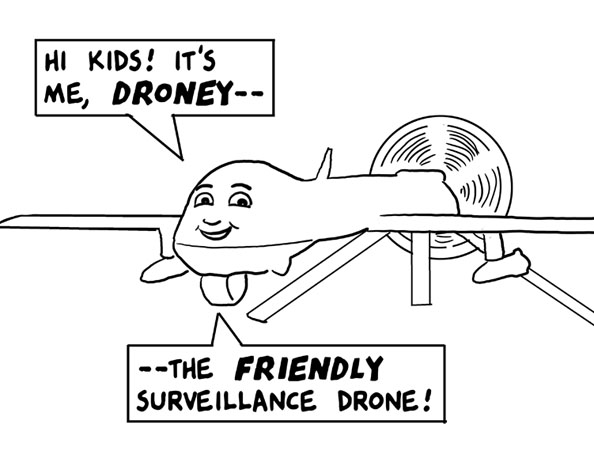
The consequences of Republican depredations and Democratic collaboration are manifest everywhere. Domestically, the country continues to suffer from a self-induced depression, the capricious continuation of which serves Republican values and interests. The GOP refuses to consider stimulus measures that would put people back to work and erase deficits. The success of such measures would defeat Republican ambitions to shrink and eliminate government and redistribute wealth upwards, two projects of great passion. Austerity means destruction and death for countless people, but innumerable personal catastrophes cannot compete with the evil that is government and the joy animating its dissolution. For the GOP it is preferable to ruin and compromise the lives of tens of millions than to have government intervene to assist them. As if prizing a nasty and brutish existence weren’t enough, the GOP doesn’t mind if it’s short either. Thus tens of thousands of people die annually from gun violence, which includes children killing children, as Republicans, at least nationally, refuse to consider the possibility of gun regulation. This also requires that government not be allowed to fund research into the public health consequences of gun violence, what with the danger of potential remedial action. For Republicans ignorance is indeed bliss. The will to ignorance also informs the Florida legislature’s so-called Timely Justice Act, which curtails defense appeals and accelerates the imposition of the death penalty, not despite but precisely because Florida leads the country in both sentencing people to death and subsequently exonerating them. Here Republicans actually prefer to enhance the power of the state when it comes to making war on selected categories of citizens, blacks in particular. It also leads to the Republican-controlled House of Representatives voting to repeal the Patient Protection and Affordable Care Act thirty-seven  times, since it is preferable that people be deprived of insurance coverage and live shorter, less healthy lives rather than have government (further) involved in medical care. Ignorance (not to mention dishonesty and denial) also enables Republicans to dismiss climate change science and the mounting environmental costs to the planet from the civilization of productivity and consumption. It is the American way of life to master the forces of nature and bend them to our every purpose; it is the American right of nature to consume the earth’s resources as called for to sustain a comfortable, pleasurable mode of existence. Republicans affirm, with a kind of bitter glee, legislation and policies that foster American privilege, even if it kills us. And when it does kill us, Republican indifference to the diminution of the central missions of Library of Congress, including digitalization and preservation of the nation’s intellectual record, and corresponding preference for the arbitrary cuts mandated by sequestration, may finally make sense. Globally, the United States reserves to itself the right of nature, to take any action in the name of security, including the assassination of those formally recognized as citizens. Universal war-making can be accomplished through a military that can invade any territory at will or through an armada of drones ready to strike individuals anywhere the president points his trigger finger, recently announced restrictions notwithstanding. The infinite projection of power thrills it proponents.


The Republican Party is a political entity driven by myriad resentments. Though it worships power, it generally despises government, especially insofar as it signals the failures of neoliberal capitalism and worse, a collective project dedicated to equality and fairness. The GOP dreams of a world of boundless private accumulation, whether of wealth, guns, status, or control, which the state must protect but with which it must not interfere. It can’t imagine the self-destruction Hobbes posited insofar as it manages to romanticize life in “the natural condition of mankind” as if it were an epic Hollywood western in which the heroic loner prevails against all odds, insofar, that is, as it believes itself immune—for now, anyway—to the horrors it happily unleashes on others. Why Democrats seem increasingly ready to embrace such an understanding of the good is another matter altogether. Their active, willing, even enthusiastic complicity, however, cannot be in doubt, starting with Barack Obama.

On the Use and Misuse of Zero Dark Thirty


Steven Johnston
Neal A. Maxwell Chair in Political Theory, Public Policy, and Public Service, University of Utah

Everybody, it seems, wants a piece of Zero Dark Thirty. Not, perhaps, since Oliver Stone’s JFK has an American film generated such widespread censure. Hollywood insiders, seeking adherents, waged a public relations campaign to deny the film a possible Oscar for best picture. From The New York Review of Books to Rolling Stone, the Atlantic to The New Yorker, the Huffington Post and beyond, Zero Dark Thirty has been maligned, denounced, and dismissed. Jane Mayer concludes a moralizing assessment by declaring: “Maybe I care too much about all of this to enjoy it with popcorn. But maybe the creators of ‘Zero Dark Thirty’ should care a little bit more.” Matt Taibbi finds the storytelling problematic and asks “all the people defending the movie, what do you think Dick Cheney’s review is going to be?” As if that rhetorical question weren’t enough, Taibbi adds, redundantly: “Isn’t it just a crazy coincidence that he’s probably going to love it?” Alex Gibney, literally unable to control his indignation, adopts a similar moralizing posture: “I feel I must say something. Mark Boal and Kathryn Bigelow have been irresponsible…” As for their film, “it is fundamentally reckless.” Politicians have also gotten into the act. Senators Feinstein, Levin, and McCain have ripped the film for its factual inaccuracies and demanded the studio make changes to it. Why these extreme reactions? Zero Dark Thirty, in short, supports or endorses torture. It’s as simple as that. Or is it?
Many of Zero Dark Thirty’s critics condemn the film for blurring the putative line between fact and fiction, history and creative storytelling, for invoking the verisimilitude and authenticity the one provides and the artistic license the other affords. Gibney, representing many, is succinct: “You can’t have it both ways.” This is a peculiar position to take not just because some combination of fact and fiction composes all of our lives, but because in this film the indecipherable combination mimics beautifully the post-September 11 understanding of Bush, Cheney, Rumsfeld and those doing their dirty work. Nevertheless, with this unexamined interpretive first principle securely in place, Mayer proceeds to criticize the film for being consistently wrong, comparing its account of events to “reality,” with reality always winning. Not only is the depiction of torture and the results it produces false, Mayer also rebukes the film for failing to convey the actual character of the torture debate within the Bush Administration, where the FBI, among other institutional players, rejected the CIA’s brutality and refused to participate in its interrogation program. This is just one example Mayer cites of dissent within the Administration. The lack of dissenting voices to American torture further incenses critics. It, too, is tantamount to endorsement. What’s worse, according to Mayer, the film offers a scene in which President Obama, in the background, denounces torture on “60 Minutes.” Given the success that torture has (allegedly) already enjoyed in the film, Mayer insists this opposition comes across as “wrongheaded and prissy.”
These criticisms suffer from a number of shortcomings, as do their critics, who, apparently, don’t want the assassination of Osama bin Laden needlessly spoiled by torture’s taint (might that make it more difficult to dance and cheer in front of the White House?). Principal among them, I would like to suggest, is genre confusion. Mayer calls Zero Dark Thirty a “police procedural.”  Taibbi thinks it’s a “detective story” with an “action-movie plot.” Gibney and Steve Coll think of it, with prodding from the filmmakers, in journalistic and historical terms. It’s not that these categories might not offer productive interpretive lenses, but they not only seem designed to set up the angry criticisms that follow, they also miss important opportunities for a more dialectical engagement with the film.
What if we read Zero Dark Thirty as a revenge tragedy? What if we read the film as revealing a country informed by a sense of rightness and victimization hell-bent on retaliating for wrongs done to it and thus blind to any possible consequences for itself, let alone the world? These imperial presumptions animate Zero Dark Thirty’s two main characters, Dan and Maya. They practice torture as a matter of course, living in a culture of torture: publicly speaking, results alone matter. Following the September 11 attacks, they presume its necessity as well as its efficacy. The film also displays torture as a reassertion of American power and mastery. We are entitled to the world; we will take it (back) on our terms and enjoy doing so. Dan, for one, revels in the power torture expresses. It feels right, even good following 9/11. Still does the film itself endorse any of this? Characters in a film may believe something to be true and act accordingly with conviction—that, however, doesn’t make it true. Nor does it mean that this is the film’s perspective. Gibney insists that “Maya is a glamorous heroine [and] we identify with her.” Do we? This is not clear to me, but it isn’t necessarily problematic, especially given the film’s conclusion, as long as the identification is weak and temporary, since she is a criminal awaiting her day in court, whether it ever comes or not.


Torture, then, plays a prominent (visual) role in the film, but what does it mean to say that Zero Dark Thirty supports or justifies torture? This (alleged) aspect of the film is particularly galling, so the argument goes, because torture played no role in locating or eliminating bin Laden. It is thus historically inaccurate, morally repellent, and politically dangerous. Whether the film effectively advocates the use of torture is not only a question difficult to answer, it may actually miss the point.
The case for torture tends to rely, ultimately, on the coercive power of a ticking time bomb scenario. “Who would not agree to torture as long as it would save (an untold number of) innocent lives,” advocates demand to know? Once such agreement is exacted, it (supposedly) opens the floodgates to an otherwise forbidden practice. Torture, then, justifies itself along narrow instrumental lines. We need to know something now to stop an unspeakable atrocity from happening and torture alone can produce the necessary knowledge. Proponents of torture, that is, do not justify it by claiming that if enough people are captured and subjected to criminal treatment, sooner or later a piece of information might be generated that, in turn, might prove useful at a later date, even ten years later, for another purpose altogether. Yet is that not roughly the brutal, ugly scenario depicted in Zero Dark Thirty? Doesn’t the torture depicted feature a man, Ammar, who may or may not be a Saudi, being questioned on a matter having nothing whatsoever to do with Osama bin Laden or his location? What’s more, torture does not actually get Ammar to talk. Two C.I.A. agents trick Ammar into believing he has talked (but has no memory of it), thus leading him actually to talk. True, they are clever enough to take advantage of torture’s manifest failure, but it did fail. They seem surprised by this realization, but they do—because they must—adjust to it. The film thus depicts the corruption of two C.I.A. case officers, standing in for America, who cannot see how far they have fallen as they can just as easily waterboard or feed another human being (Ammar) under their control. What’s more, throughout the film terrorists implement one successful terrorist attack after another (in London, Saudi Arabia, Islamabad, an American military facility) despite the widespread torture being practiced to prevent it. Still, the torture continues.
At the close of the film, following bin Laden’s execution, Maya is seen sitting alone in a C-130, weeping. This follows a scene in which she confirms it is bin Laden who has been killed, a moment that brings her no apparent satisfaction, let alone joy, which is remarkable since a great enemy has been defeated. What might the tears mean? Does she finally appreciate the cost of the ten-year mission-cum-obsession she pursued? The very moral and political values she swore to uphold were repeatedly violated, even destroyed. She has become, at best, not at all dissimilar from the enemy she hates. Does she sense that this convergence was too high a price to pay, that she cannot justify what she condoned and committed? In the wake of bin Laden’s death, she might be remembering the ugly confrontation she initiated with Joseph Bradley, C.I.A. station chief in Istanbul, who told her that bin Laden was an irrelevancy, old news, no longer a prominent player in the new al-Qaeda. Bradley was focused on defending the country against real, active threats, not old ghosts. Maya was only able to see her grand obsession to its conclusion by effectively threatening Bradley with public career suicide. Bradley, recognizing a deranged fanatic when confronted and assaulted by one, relents. This did not make what he said wrong—anything but, since Maya barely makes a case for her obsession. Bradley recognizes that she cannot hear what he is saying and merely chooses a pragmatic course of action when giving her the resources she demands to (possibly) consummate her hunt. Maya does succeed; bin Laden is assassinated. 
Yet as an act of revenge it is unsatisfying, impotent even: it can’t undo bin Laden’s 9/11 triumph. Nor can it be said convincingly to enhance America’s security. He can and will be replaced. Moreover, as Taibbi notes, bin Laden succeeded along another, more insidious dimension than the attacks themselves. He wanted to provoke the United States into a barbaric response, committing deeds that revealed its true character. Taibbi concludes (and this accounts for his outrage) that Zero Dark Thirty celebrates this response; I would argue it exposes it.
As the film concludes, the futility, perhaps absurdity of Maya’s actions may suddenly be dawning on her, at least at a visceral level. The somber mood of the film peaks and exudes a feeling of cold emptiness. Taibbi rejects this reading (of regret) of the film and does so, oddly enough, because it is a “reading in,” as if he is not also interpreting the film as he condemns it. Critics like Mayer and Taibbi want to be able to moralize; they want a film like Zero Dark Thirty to rebuke and castigate torture in no uncertain terms; they don’t want (or trust) the audience to do any difficult, critical interpretive work, to discern the tragedy (the self-destruction) unfolding before them and their own implication in it. But isn’t that the only way to prevent future self-inflicted disasters, to come to a realization on our own rather than through another’s hectoring?

Obama, Drones, and the Inauguration


Steven Johnston
Neal A. Maxwell Chair in Political Theory, Public Policy, and Public Service, University of Utah

Thanks to the nomination of John Brennan as C.I.A. director, the United States is finally conducting a national conversation about President Obama’s dangerous expansion of presidential power. Going Bush and Cheney one better, the Obama Administration insists that the president can order the targeted killing, that is, the legalized murder, of American citizens abroad if they pose a threat to American interests. The so-called white paper obtained by NBC News in early February ostensibly narrows the range of executive action by limiting it to high level al Qaeda officials posing “an imminent threat of violent attack against the United States,” but the definition of imminent is so broad that it allows targeting anyone deemed a terrorist (read: enemy of the United States). 
The official conversation, not surprisingly, is rather dismal. One idea, floated by Senators and supported by Obama, has developed some traction: establish a secret judicial review process to sanction the killings. The problem here is not just that proponents of this idea model it after the Foreign Intelligence Surveillance Act court, a clandestine body that “monitors” government eavesdropping in the United States and rarely if ever denies the state the warrants it seeks; the problem is that Obama and others want to normalize the practice of presidential killing, give it both a Congressional and official judicial seal of approval. The proposal, in other words, seeks to disseminate responsibility—and thus, ironically, preempt accountability—for a “process” that has no place in a democratic society.
Remarkably, while a handful of politicians express some concern or unease about executive overreach (how can the president play the role of prosecutor, judge, jury, and executioner?), there is little or no indignation, at least not in the mainstream. What’s more, even proponents of the idea of a supervisory court worry that it might impinge on the president’s prerogatives as commander-in-chief. Thus the very reason for a court also turns out to be an objection to it. What’s worse, the president, perhaps too busy skeet shooting to exercise the authority he claims to possess, has distanced himself from active involvement in the targeting process, preferring to unleash a rejuvenated C.I.A. that effectively answers to no one. Obama may ridicule Republicans for wanting to live in the 1950s, but he has already returned government to that lawless era of coups and assassinations. 
The lack of outcry should come as no surprise to any close observer of American politics. The United States loves executive power and wants to see it deployed, including in spectacular fashion, on behalf of American interests. Obama has been waging a vicious drone campaign for years in Pakistan, Yemen, and elsewhere, producing hundreds of civilian casualties, without official dissent. Republicans who profess to believe in small government, who foam at the mouth at the prospect of the state playing a supporting role in providing health insurance to tens of millions of fellow citizens, fall silent in the face of Obama Administration’s happy trigger finger.
The country’s love affair with executive power was on full display during last month’s inauguration. Nationally televised, commentators universally celebrated the event as American democracy’s finest moment: the pageantry of the peaceful transfer (or reaffirmation) of political power. No prospect of coups, no violence in the streets, nothing untoward mars America’s political system. What a sight to behold, we were told over and over again.
What were we actually looking at while being tutored in American political ritual by the likes of Diane Sawyer? Our attention is riveted on a large black SUV with tinted windows, containing the president and first lady, making its way slowly on the streets of Washington, D.C. from the Capitol to the White House. When will the SUV stop, Sawyer asks breathlessly? When will the brave president leave the secure confines of his armored vehicle, alas necessary in the age of terrorism, an age which makes him a target wherever he goes? At long last Obama deigns to appear before the American people. This is the moment we have been waiting for. Ooh, look at the thickness of the door frame, Sawyer gushes. No one knows just how thick it is, she claims (it looks to be about six inches). There he is! President Obama waves to the people, to his most ardent supporters, to federal employees who have the day off. He’s a veritable rock star. Jonathan Karl offers some firsthand reporting about the electric atmosphere, but it’s so loud he can’t hear a thing! I hope you can hear me, Diane! As Obama walks a few blocks on Pennsylvania Avenue, he carries on a tradition started by Jimmy Carter in 1977 to make the presidency seem a little less imperial. By displaying himself in this way, the school lesson continues, Obama shows us that he is the American people’s president. He represents us. It’s a moment for people and president to bond in celebration of the exceptional American political system (as if other democracies don’t routinely transfer power without incident). That this same smiling, beaming man might also have to wield terrible destructive power is the farthest thing from anyone’s mind. Besides, that’s not the face of a killer, is it? Look, he’s waving to me! He’s saluting us! Two thumbs up!
Still, Obama’s inaugural address emphasized the indispensable role of citizens in the American democracy. It’s “we, the people” who ultimately matter and decide the country’s future. If we act together, our best days lie ahead of us. Thank you for this reminder, Mr. President. Perhaps we should start by raising the question of impeachment for the blood on Obama’s hands. Not because I have concluded that Obama can or should necessarily be impeached, but to give the drone question the proper political, juridical, and rhetorical context. True, Obama accelerated withdrawals from Iraq and Afghanistan, but the price has been high and paid largely by others (Pakistani and Yemeni civilians). After all, might not the arbitrary assassination of American citizens (not so-called citizens, Diane Feinstein’s rhetorical sleight-of-hand notwithstanding) constitute a “high crime” as delineated in the Constitution? Cornel West thinks Obama’s drone program, with hundreds, perhaps thousands of casualties, amounts to a sequence of war crimes. Let’s act on Obama’s advice and take back (some of) the power that presidents, perhaps especially the last two, have arrogated to themselves. We can start with Barack and then move on to W., who can’t be impeached, but that doesn’t mean he doesn’t belong in the dock for his personal war in Iraq. In the name of national security, our democratic security, let’s put presidents in their place. That they walk among us and wave every four years does not make them any less dangerous; if anything it enhances the awesome powers already at their disposal. 

The Republican Imperium


Steven Johnston
Neal A. Maxwell Chair in Political Theory, Public Policy, and Public Service, University of Utah


Mitt Romney, Paul Ryan, and the Republican Party represent not just a disturbing, destructive social and political movement; they also pose a threat to the very ideas of democracy and democratic government. This can be seen (it’s not as if they work hard or consistently to hide it) in two distinct, if also ultimately related ways. 

First, Republicans have been orchestrating a nationwide campaign to suppress voter turnout. Invoking the possibility of voter fraud, their own fabrication masquerading as a cause, the GOP has managed to pass numerous voter identification laws, especially in battleground states, to disenfranchise American citizens. The identification requirement, supposedly neutral, discriminates against the poor, elderly, young, and minorities, all of whom tend to vote Democratic. Republicans have also been purging election rosters of eligible voters (claiming citizens to be noncitizens), curtailing early voting periods, sanctioning voter registration campaigns with criminal penalties for the smallest of clerical errors, and whatever else they can think of to depress Democratic turnout. In moments of candor, they publicly admit these electoral measures are designed to produce one result: the election of Mitt Romney. Furious at the presidential election result four years ago, the GOP targeted for suppression groups critical to Obama’s victory. The GOP also has at its disposal electoral vigilantes (True the Vote) who plan to harass and intimidate voters at the polls, effectively forcing or keeping them at home. The 2012 election could well produce an illegitimate president, a Republican who holds office by virtue of crimes against democracy. The GOP is utterly indifferent to such a possible outcome, believing that it and only it has a right to rule in the United States. This conviction, rooted in a sense of superiority, patriotism, and truth, informs another feature of Republican conduct dominant these last four years: a “politics” of total obstruction, even destruction, no matter the social or economic cost, of an African-American president they loathe. A minority party, the GOP acts as if it has a mandate to rule. Remarkably, Republicans believed from the start that there would be no political cost to their sabotage insofar as they also believed the American voter would ultimately hold Obama responsible for the wreckage they produced. Republicans, in short, indulge an ugly form of political entitlement, namely, that they can commandeer a system to produce their desired outcomes, which, by definition, are the right outcomes. The presumption of political entitlement matches their sense of social and economic entitlement, deploying the vast resources of the state (subsidies, tax breaks, etc.) to enrich themselves—again, no matter the cost to others.

This brings me to the second source of the threat the GOP poses to the very idea of democracy. To many observers of American politics, Republican machinations may seem excessive but nothing more. Yet the GOP conducts itself domestically much like European imperialism conducted itself in the heyday of Western colonization in Africa and the Middle East. The latter ignored the natives of the lands it conquered, unwilling and unable to see them or the ways of life they had cultivate for generations. Europeans would treat natives as effectively invisible and proceed to remake (read: steal, exploit) the country in their own grand image. The dominant motif of the Romney-Ryan campaign, similarly, is, “We can rebuild it.” This claim presumes and professes a sense of overwhelming power, a power capable of removing any obstacles in its path. The power is so fantastic that Romney believes his mere election will result in economic revival. He doesn’t actually have to do anything to spur renewal. His mere status as President suffices. The claim also suggests that nothing meaningful or valuable (no institution, organization, party, program, or policy) stands in the way of rebuilding, certainly nothing Republicans can see. They are thus free to dismantle the social safety system and network of public institutions that tens of millions of hard-working citizens built across generations and earned, through blood, sweat, and tears, the right to enjoy. It would afford a modicum of protection against the regular, predictable ravages of an economic system the GOP would like to unleash on them. Accordingly, when Romney talks about “getting government out of the way,” this does not mean freeing economic actors to create jobs; they can do that already. It means leaving tens of millions of people exposed and vulnerable to the inevitable depredations of an economic and political system designed to concentrate wealth and power in fewer and fewer hands—hence the pathological hatred of unions, whether public or private, and the drive to eradicate them from American life. Opposition, let alone resistance, cannot be tolerated.

It’s no coincidence that Romney and Ryan champion more of the same policies and programs that led to the greatest economic crisis and social destruction since the Depression. The superrich thrive in these circumstances. The country may suffer, but they continue to prosper—and further separate themselves from the rest. The GOP relishes the brutality of a class warfare in which it enjoys a virtual monopoly of the social, political, and economic weapons needed to wage it. The GOP disdains the so-called 47% (the real figure is actually much higher) which would be left to fend for itself in a world where it has been effectively disempowered, stripped of its prior social democratic accomplishments and protections in the name of free market utopianism. After all, the 47% are parasites: they produce nothing; they create nothing of value themselves; they only take from the government, which means they take that to which they have no real right. They can thus be ignored, despite their real presence throughout the country. Worse, they can be acted upon, which is what the GOP plans to do as Republicans rebuild a country in no need of their imprint.

The GOP dreams of a world in which the very rich arrogate to themselves the vast wealth a capitalist economy produces, an outcome made possible by rules, regulations, and practices they devise; given the force of law thanks to “representatives” they usher into office courtesy of a political system they have bought; and sanctified by an activist Supreme Court they have installed. It’s a vicious economic-political noose that threatens to tighten the grip on democracy and make it yield to the slightest pressure from its masters. Republicans must rule the country they profit from, even pillage, while the rest are to be marginalized and dismissed, essentially foreigners in their own land. Those who think Romney and the GOP live in the 1950s may need to reset their calendars. They’re not nearly so modern.

A Dark Knight for Entitled Times


Steven Johnston
Neal A. Maxwell Chair in Political Theory, Public Policy, and Public Service, University of Utah


Handicapping presidential elections becomes, every four years, an American pastime. So, I’d like to offer an early prediction. Mitt Romney will defeat Barack Obama in November—not despite his neoliberal extremism which promises an apartheid America, but because of it. I say this given the stunning success of the final installment of Christopher Nolan’s Batman trilogy, which opened July 20th. Not even two weeks old, it has already crossed the $300 million mark.


The Dark Knight Rises is a strange denouement to an otherwise fascinating triptych. The story takes place eight years after Batman has taken the rap for a crime he did not commit, the murder of Gotham’s crusading district attorney, Harvey Dent. Dent had been mounting an effective campaign against crime and corruption, with Batman’s extralegal assistance, of course, until he had to pay a severe personal price for his service. He then turned to crime himself, which Batman and (future police Commissioner) Gordon covered-up by implicating the man in the black cape. In the aftermath of Batman’s foul deed, Gotham is reborn, thanks to the awesome powers contained in the (posthumously named) Dent Act, a law and order bonanza granting near-limitless discretion to the city. Unlike Harvey Dent, Batman is willing to impose and endure sacrifices for Gotham’s greater good. He will play whatever role the city needs. And what it needs, to rally and unify itself, is a scapegoat. A tragic bind informs The Dark Knight, as Batman saves the city by also doing great harm to it, including himself, the latter leading to a life on the run. The new Gotham will be built on a lie and the ruins of a life.


The life also belongs to Bruce Wayne, billionaire, philanthropist, playboy. Stripped of cape and crusading, Wayne retires to his castle a feudal baron and recluse. When Gotham is once again jeopardized, however, Batman sounds the alarm and resurrects himself. He will do whatever is necessary to save Gotham, which, it is clear, he considers his personal domain.


Initially, Batman is no match for his new enemy, Bane. Broken and beaten, Batman suffers external rendition, which cannot stand. As Gotham moves closer to annihilation, Batman finds affective and physical reserves on which he can draw for the rematch. Since Batman is a comic book figure, I suppose it’s fitting that his ability to heal himself takes ludicrous form: he overcomes a serious spinal injury through a primitive kind of traction and lots of sit-ups. It might be tempting to invoke patriotism as the balm that heals, but the film’s conclusion makes it clear that Batman had no intention of making the ultimate sacrifice for Gotham, though he’s happy to let the people think so. He’s living the good life in Italy with his new love. When the legend threatens to become fact, build a statue to the legend. The only people who don’t know about Batman’s legerdemain, of course, are the people themselves. The film makes a mockery of patriotism, which it reduces to pablum served up to gullible citizens who need to believe in something or someone greater than themselves, which means they need, in this case, childish fictions.


The Dark Knight Rises shows contempt for regular people. Batman’s enemies plan to slowly destroy Gotham, with, of all things, the people’s help. They play the class warfare card and the people run amok, throwing the rich out of house and home and onto the streets in terror. Once they have tasted the spoils of war, they act like pigs and despoil their own booty. You can’t let just anyone into the world of the rich and famous, can you now? They won’t know what to do with it. The life of the one percent is for, well, the one percent.


Despite a nuclear threat, moreover, the people stay in their homes cowed. No one takes to the streets in the name of the civic. This is ultimately Batman’s war to win or lose—because it is his city. If The Dark Knight Rises makes a mockery of patriotism, infantilizing it, it also makes a mockery of democracy, demonizing it. This should come as no surprise. When a gang of virtue-obsessed vigilantes first proposed destroying a corrupt Gotham in Batman Begins so that it could rise from its own ashes, Batman, in its defense, pleaded for more time to do the job himself—if with a fewer casualties. Even so, every time Batman swings into action, accompanied by pulsating, deafening music, you can’t help but thrill to the violence about to be inflicted on his enemies. Given the fascist sensibility in play, you should be rooting for mutually assured destruction of Batman and Bane, but the film reaches a part of you that identifies with excessive force and yearns for its unrelenting expression against state-designated enemies.


Bruce Wayne—perhaps aided by secret Swiss or offshore accounts—finally abandons Gotham for Europe and a life of ease. Yet with his menacing statue left behind, Batman continues to rule—in absentia. He no longer needs to be present to govern the city. If a false hero such as Harvey Dent can inspire a new regime, imagine what a true hero can do with a little granite. And now that the people understand they cannot be trusted with power or wealth (they abuse one and squander the other), they know their place. Should they forget, Bruce Wayne can return whenever he desires. His economic empire may have been formally destroyed, but he has the connections to rebuild it. The one percent always has options, as Bill Connolly’s recent post nicely demonstrated. In the meantime, Batman has anointed his nominal successor, Robin, to the seat of extralegal power. But what Batman gives he can also take away.  It’s his city and the people live in it according to his rules. The social and economic elite can be trusted to rule the world, largely to their benefit, it goes without saying, and we are to live gratefully in it, especially since these elite cultivate and indulge an aspiration that one day we might actually join them. The Dark Knight would quickly come out of retirement should that remote possibility ever become an actual threat to the order of things. Still, in the United States alone the film is on its way to the half billion dollar mark in ticket sales—by the people. Start practicing now: President Romney, guardian of the regime.
      

America, Democracy, Elections


Steven Johnston
Neal A. Maxwell Chair in Political Theory, Public Policy, and Public Service, University of Utah

America’s national elections in the fall promise to be expensive and ugly. Expensive because a hyper-activist conservative Supreme Court majority opened the monetary floodgates in Citizens United v. Federal Elections Commission; ugly because the Republican party thinks it is the one and only political entity to rule the United States legitimately. This is one of many reasons it has sought to destroy the presidency of Barack Obama from the day he assumed office and will spare no expense to finish the job over the next four months.


For many citizens, the elections don’t amount to much. The differences between the parties, from one angle of vision, are slight. Each bears responsibility for the neo-depression which continues to inflict awesome suffering on tens of millions of Americans and each remains beholden to Wall Street bankers and financiers. One party would let neo-liberal capitalism run completely amok; the other would moderate it around the edges. Obama’s economic team (Timothy Geithner and Company) champions the very philosophies that led to disaster. As for national security affairs, Obama has extended and enhanced the executive self-aggrandizement practiced by the Bush-Cheney Gang, evidenced most notably, perhaps, in Obama’s claim that the president can play prosecutor, judge, and jury as he orders the assassinations of American citizens while waging personally the so-called war on terror.  Obama has also one-upped Bush-Cheney with unrivaled efforts to target and imprison those who leak, a valuable democratic act, details of government malfeasance and criminal conduct. The hope that Obama represented has come largely to naught. If people don’t feel betrayed, perhaps especially the much coveted American youth, they feel a profound sense of disappointment. Obama’s been a presidential loser.


For many citizens, on the other hand, significant differences between the parties remain—regarding gays, women, reproductive freedom, the environment, religious tolerance, and immigration, to name but a handful of issues. Despite Obama’s abysmal performance as president, a combination of foreign arrogance and bellicosity and domestic foolishness and passivity, a second term would be preferable to a manifest political hack such as Romney, who, when he’s not lying about Obama’s record, exhorts policies (tax cuts, deregulation) that promise more of the same economic destruction and radical redistribution of wealth the GOP has perpetrated for decades. A Romney presidency would do nothing but make matters worse—unless you belong to the same privileged world of Romney. His is a vision of the one-tenth of one percent for the one-tenth of one percent.


There might be another way to think about the election, national politics, and the economy, namely, in terms of democracy’s future. It’s not that the United States can claim to be much of a democracy these days no matter your party affiliation; it’s that the Republican Party envisions an America in which democracy is effectively eliminated and power is privatized. To better service its financial and corporate overlords, it seeks permanent one-party rule, which will further weaken electoral accountability, and give free rein to the fiction of an impersonal market that can only be harmed by state regulation but in reality relies on a great deal of state support to function. This GOP fantasy has been kept alive and nourished by Obama’s pathetic performance.


The ambition of one-party rule lies behind the GOP’s historic abuse of the filibuster, which converts majority rule into effective minority governance by blocking Senate action on legislation; the ambition of one-party rule lies behind the GOP’s multi-state effort to purge the electoral roles of legally registered voters (young, poor, ethnic) who might favor the Democrats in the name of a concern for widespread fraud that does not exist; the ambition of one-party rule lies behind the GOP campaign to destroy public sector unions in the name of fiscal responsibility while the party continues to push for tax cuts for the wealthiest of Americans; this is but a prelude to planned assaults on private sector unions, with both entities assumed to be Democratic supporters; crush the unions, kill the Democratic Party; the ambition of one-party rule lies behind GOP redistricting efforts following the 2010 census to ensure their electoral success prior to any actual election; the ambition of one-party rule lies behind the blatantly partisan Supreme Court decision in Citizens United, which threatens to render moot the always precarious notion of competitive or meaningful elections on behalf of the GOP; it even lies behind John Roberts probable change of mind in the health care decision, a brilliant tactical calculation (given the rapidly deteriorating respect in which the Court is held) to sacrifice a short-term goal better to guarantee long-term political victory.


It’s not that America’s democracy doesn’t routinely find itself, to some degree, under pressure, even downright assault. The “war on terror,” for example, like so many wars before it, has been accompanied by a retrenchment of various political rights, assembly, free speech, and habeas corpus among them. It’s that the Republican Party openly seeks to defeat, marginalize, silence, and ultimately destroy its political enemies so that it can rule (rightly, of course) untrammeled, indefinitely. In this context, it could be argued that citizens have an obligation to vote against the party of their choice, if that party is the Republican Party, because of a greater obligation they have to American democracy.


It’s not enough for Republicans to see their values and interests triumphant at the ballot box; they believe that their values and interests are one with America itself—properly articulated and understood, of course. It doesn’t matter that the people themselves would—do—disagree. Those who disagree are wrong at best, deviant and dangerous at worst. The Republicans have shown that they are ready, willing, and eager to inflict enormous damage on the country to see their one-world vision realized. Hence their opposition to meaningful economic stimulus to put people back to work and help balance the budget despite years of depression; hence their refusal to provide aid to state and local governments, despite record low interest rates, because it would have lowered unemployment rates and bolstered the gains in the private sector; hence their opposition to restoring tax rates to the Clinton era to help balance the budget despite the fiscal cataclysm they say awaits us; hence their opposition to health care insurance for tens of millions of Americans without it and a penalty for free riders, which would also contribute to fiscal responsibility; hence their opposition to even minimal regulatory action to prevent a restoration of the economic practices the damage from which the country still suffers, as J.P. Morgan reminds us; hence their opposition to consumer protection reform that might secure home buyers against destructive mortgages and put a dent in the profit margins of big banks that charge customers predatory interest rates for credit cards and outrageous fees for everyday transactions.


The Republican economic and political vision is incompatible with anything but a pretense of democracy. Democracy is not only unnecessary to this vision; it’s a threat to it. Is it any wonder that American police, taking their marching orders on behalf of private property and “public safety,” after a period of indulgence, acted swiftly and decisively to contain, control, and finally remove the Occupy Wall Street movement from city streets and public view? With democracy an increasingly endangered species and any kind of economic security increasingly beyond reach for most Americans, much more than one election may be on the line in the fall. The nature and future direction of the American economy—and thus the life prospects of the 99.9% percent—are at stake; the distribution of power and wealth both public and private are at stake; America’s democratic future may thus be at stake as well.

I’m a Congressional Medal of Honor Winner


Steven Johnston
  Neal A. Maxwell Chair in Political  
  Theory, Public Policy, and Public  
  Service, University of Utah


In February the Supreme Court heard U.S. v. Alvarez, the hyper-patriotic Obama Administration’s defense of the Stolen Valor Act of 2005. This piece of superfluous legislation prohibits “fraudulent claims of receipt of military decorations and medals.” Infractions can result in fines, even imprisonment. Sonia Sotomayor appeared to be the only justice to appreciate the law’s patent absurdity. Speaking to Donald B. Verrilli, Jr., Obama’s Solicitor General, Sotomayor remarked: “You can’t really believe that a war veteran thinks less of the medal that he or she receives because someone’s claiming that they got one?” Given Sotomayor’s rhetorical question, it might be worthwhile to remove the case from the sphere of first amendment jurisprudence (does the Act represent an undue infringement on speech?). It’s not that we shouldn’t be concerned about another assault by the Obama Administration on the integrity of the Constitution. It’s not that we shouldn’t be concerned about the prospect of another flimsy decision from an activist Supreme Court dominated by right-wing conservatives. It’s that the law itself (and the many inflated defenses of it) might reveal something telling about patriotism and patriotic culture.
The government and veterans organizations insist that violations of the Stolen Valor Act result in “real and significant harm” (Verrilli). Yet they cannot provide any actual evidence of harm, perhaps because it’s not clear what harm might actually mean or look like.  It’s almost as if the Act itself is designed (through passage, application, prosecution, and appeal) to bring about a harm that did not previously exist. Here harm can be created if you can convince (enough) people that harm has been inflicted. And you convince them not by showing demonstrable harm, but by deploying the claim of it mantra-like. Insistence works. Sotomayor’s question is thus both astute and obtuse. Astute because it dismantles the government’s position through gentle ridicule, obtuse because the claim made by the government (and veterans organizations) isn’t exactly sincere. It’s something of a lie, which may be precisely its point. The target audiences of patriotic prevarication expect, even demand this kind of insistence, insistence made all the more imperative in the current context by two broken wars, one (Afghanistan) a self-inflicted failure, the other (Iraq) an imperial atrocity. In short, the Stolen Valor Act of 2005 is deployed absent the conditions of possibility of valor. The American military issuing honors in this compromised setting is comparable to a fire department awarding citations for bravery to people who set the very fires they extinguished. What’s more, the government’s claim, taken seriously, would turn macho heroes into hapless victims. Accordingly, the government’s charge can be read as an injunction to citizens regarding patriotic truths. It doesn’t matter if most citizens already imbibe such truths; for a patriotic culture even a single outlier feels intolerable. 
False claims about military service and rewards are nothing new. George Washington expressed indignation about valor fraud committed by members of the military and vowed to punish the guilty. Thanks to the Civil War and World War I, false claims became almost commonplace. Congress even passed a law in the first part of the 20th century prohibiting the manufacture, sale, or dress of military medals the government had not officially sanctioned. 
Such legislation can be seen as part of a continuing effort in a patriotic culture to install military service as the finest expression of democratic citizenship. No one, to my knowledge, is concerned about the honor or integrity of the football profession when a head coach on the move fabricates experiences or expertise on his résumé to advance his career. Nor do coaches who play by the rules demand special protection to defend their good names and reputations, the latter placed in jeopardy by charlatans. As such, those defending the Stolen Valor Act seem to presume its legitimacy borders on self-evident. It’s worth noting that the usual response to military deceit, public exposure and humiliation, is considered insufficient, even though it presupposes and engenders the very honor and respect advocates of the Act say have been gravely harmed. When the state becomes involved, which turns deception into criminality, the community can be said to have expressed its judgment on the matter. Vigorous enforcement of the Stolen Valor Act can bring about the community whose existence and support it takes for granted.
Xavier Alvarez, a professional liar who ran afoul of the Act when he claimed to be a Marine Corps veteran and Congressional Medal of Honor winner, can hardly be deemed capable of harming the military system of rewards. A small-time California water official, Alvarez has claimed, among other things, to play hockey for the Detroit Red Wings, to have rescued the American Ambassador to Iran during the hostage-taking crisis, and to be married to a Mexican celebrity. Still, the contrast between the silliness of the defendant and the ostensible augustness of the Act may actually enhance it. Of course Alvarez would lay claim to the highest military honors. What better way to elevate his status and standing in the community than by providing himself with a heroic identity previously lacking? In a highly patriotic culture, it makes good sense to claim to be a patriot-hero. Prosecution of Alvarez might seem ludicrous. Yet by making a federal case out of it, you effectively convert a silly spectacle into a problem. It’s an occasion to remind the country that sacrificing for country is the highest form of service and that sacrifice means killing and dying. To enshrine such a perspective and place it beyond challenge may entail, among other things, prosecuting those who do not appreciate its sanctity. 
Alvarez’s lie, a form of secular blasphemy, has been judged outrageous. Worse still, he does not embody the proper comportment to military service, which includes but also exceeds due deference, perhaps a dose of awe. That Alvarez could pretend to be, that he could pose as a Congressional Medal of Honor winner proves that he is, well, unpatriotic. He has not internalized and enacted the very ethos that would make such a crime not only unthinkable but also undoable. The only surprise here: fines and imprisonment delimit the punishments available.

Animals Can Be Patriots, Too


Steven Johnston
Neal A. Maxwell Chair in Political Theory, Public Policy, and Public Service, University of Utah


Patriotism as a normalizing force, presupposing and engendering its own truth, succeeds by continually extending its reach. Innumerable acts of remembrance, rituals, ceremonies, exercises, dates, events, historic figures, gestures, songs, tributes, render it a nearly irresistible phenomenon. In the United States it seeks to colonize democracy itself.


The United States government, a principal player in the patriot game, cannot do enough for those who kill and die for their country. Witness the “Vow to Hire Heroes Act” and the “Civil Service Recognition Act” recently passed into law, the subjects of my last two posts. Soldiers and civilians who run the ultimate risks find themselves joined by a new breed of patriot. For perhaps the past decade or so, commemorative ambition has also focused considerable attention on four-legged 'members' of the military.


Interest in military working dogs soared in the aftermath of the Navy SEAL raid that ended with the assassination of Osama bin Laden last May. This is due to the critical role that Cairo, the single canine in the eighty-member team, played in the mission. While Cairo’s specific tasks may be unknown (information about the raid is, of course, classified), it’s likely that he would have been responsible for monitoring anyone who tried to escape (or enter) bin Laden’s compound. Military working dogs have the capacity to capture human targets through terror or sheer force (the bite of one of these dogs can exert anywhere from 400 to 700 pounds of pressure). Dogs may be domesticated, but these dogs can shed their domestication on command. 


Historically, the United States has treated war dogs abominably. Thanks to Clinton-era legislation, however, military working dogs can now be adopted upon retirement. The number of applications skyrocketed following news of canine participation in the Pakistan raid. Most dogs do not enjoy the celebrity of Cairo and the jobs they perform are even more dangerous. Close to 3,000 dogs “serve” in the military worldwide and some 650 serve in war zones, including Iraq and Afghanistan. The number one cause of human casualties (and thus canine fatalities as well) has been IEDs (improvised explosive devices). Dogs have proven themselves indispensable when it comes to detection, far surpassing any technological or human means deployed for the same purpose. One reason: IEDs often have no metal components. Dogs thus become an irreplaceable asset or resource. They have but one purpose: save human lives, including at their own expense. Ron Aiello, president of the United States War Dogs Association, with undue and surprising modesty, describes each dog as a "kind of hero in a way".


The tasks assigned dogs are deadly. Bomb detection is not foolproof.  Moreover, the American military’s use of dogs is no secret, which means that opposition forces learn to target them. The Taliban is the latest example, following the NLF in Vietnam. This may be a regrettable side-effect, but the military would never reconsider the use of dogs as a result.  In excess of 50 military working dogs have been killed in action over the last six years, but if dogs save hundreds of human lives (or more) each, the cost is deemed well worth it. And speaking of cost, the American military will do its best to redeem every dollar invested. Thus, dogs disabled by their service do not necessarily receive immediate discharge. With the investment in each dog running to close to $50,000, the military is determined to extract every cent it can from its canine members. Ultimately, the condition of the dogs is at best a secondary concern: the primary concern is that they continue to execute successfully the tasks assigned them. “This is a human health issue as well,” Dr. Walter F. Burghardt, chief of Behavioral Medicine and Military Working Dog Studies at the Lackland Air Force Base Military Working Dog Hospital, insists. Dogs traumatized by combat are subjected either to “desensitization counterconditioning” or to a regimen of drugs to calm them. Through one, dogs will be exposed to the very terrors that incapacitate them and rewarded as they learn to overcome their fears and perform their official duties. Through the other, they might be prescribed Xanax. Here what works for humans who suffer panic attacks can also work for dogs. The dogs, of course, should be panicked. The resistance they offer to further service is not respected; rather, it is to be overcome. The military thereby shows its disregard for life itself. Successful rehabilitation does not mean the dogs are cured. They are permanently scarred. As one medical expert in the field, a Tufts veterinarian, observed: “It is more management. Dogs never forget”.


Dog advocates have focused not on the use of dogs in war, but on the treatment of military working dogs following the completion of their service. Military Working Dog Adoptions, founded by Debbie Kandoll, seeks to facilitate placing retired dogs in loving homes. The military, which classifies dogs as equipment, will not pay for transport back to the United States, insisting that once a dog is adopted, it is no longer military property and thus the responsibility of the new owner. If anything, were the military to pay for transport, it would amount to “fraud, waste, and abuse,” according to one Air Force Major General. Kandoll and others recommend Congressional legislation to change the status of dogs. Many advocates would also like to make dogs eligible for decoration, a practice supposedly reserved for humans (there is one report of a dog receiving the Silver Star for a suicide mission). They would also like to see the military devote meaningful medical resources to the dogs’ care once they have been repatriated. All of this seems likely to happen. The irony of such well-meaning efforts made on behalf of dogs is that they obscure the more pressing ethical issue, namely, the very use of dogs (and other animals) by the military in the first place.  In this context, consider perhaps the dominant concern of those closest to the dogs, their handlers, who very much want military working dogs to receive the recognition they are due. According to Aiello, “It’s a question I get over and over again from the handlers. They ask, ‘Why can’t my dog receive some type of recognition for what they’ve done for me and other troops’”? The implicit complaint is that this is no way for the country to treat those who serve it with their lives, that is, this is no way to treat heroes, patriots. More importantly, the absurdity of the call for recognition seems to escape notice, for it is tantamount to recognizing ourselves for the ingenious use to which we put other species on behalf of our human, all too human projects, however violent or murderous. Thus, as dogs are treated more and more like humans, the legitimation of their use can be increasingly taken for granted. And as legitimation succeeds on this register, it reinforces similar assumptions operative regarding humans—that citizens (or at least some subset of them) amount to little more than standing reserve, on call when the country summons them. With the waste of so much human and animal life, it must be revalued according to a patriotic logic in which death—being killed—becomes inherently meaningful. Patriotism simply won’t allow dying for nothing. Not even and especially if you’re a dog.