An ‘Israeli Spring’? Popular Protest and Political Resignation Converge on Tel-Aviv’s Rothschild Boulevard.


Daniel Bertrand Monk,
  Colgate University
  Daniel J. Levine,
  Colgate University
When young Israeli professionals erected a tent city on Tel Aviv’s Rothschild Boulevard in protest against the Netanyahu government’s indifference to an affordable housing crisis in Israel, they self-consciously modeled their efforts on the popular revolutions commonly referred to as “the Arab Spring.” Handmade signs reading “Rothschild, Corner of Tahrir” invite us to make comparisons between the style of this ‘Israeli Spring’ and the events in Cairo that brought down the Mubarak regime last April. Many commentators have done so as well. 
 “Among the many handmade signs in the Israeli protests is this one prominently stating: “Rothschild, Corner of Tahrir.”
On the face of it, the Netanyahu government’s response invites a similar comparison. Like Mubarak, Netanyahu seems to have been surprised by the extent and commitment of Israel’s “Facebook” revolution. In an echo of Egyptian officials’ efforts to discredit the Tahrir protesters as servants of foreign interests who were selling their loyalties for boxes of fried chicken, Netanyahu’s allies dismissed the Tel Aviv protesters as spoiled “nargileh-smoking, sushi-eating” children. Netanyahu’s cronies, it is true, stopped short of intimating a connection between the Rothschild protesters and al-Qaeda. But the Israeli political milieu provides its own vocabulary for delegitimizing comparisons, as when right-wing Knesset Member Miri Regev (Likud) called the protestors “leftists,” and compared them to Israel’s “Black Panther” movement of the 1970s. Only after 300,000 Israelis took to the streets on August 6 demanding a reordering of national priorities did Netanyahu make public statements indicating that the demands of the protesters were legitimate, even as he sought to buy them off with promises of reform and a blue ribbon commission.
"An Israeli matron reads about the previous night’s protests in a Tel-Aviv café. The newspaper’s headline: “Israel in the Streets. 300,000 protestors. A New Land.”
As with their counterparts in Egypt, none but the most naïve of Tel Aviv’s new “urban Bedouins” have considered the Prime Minister’s proposals to be anything but cynical. Most have vowed to stay the course in the tent city on Rothschild Boulevard even after the rains come to Israel in November. “This regime of capital will crumble,” stated Yossi Baruch, spokesman for the largest tent city in Haifa, in response to the PM’s promises to expedite the construction of 50,000 new low-income housing units as part of a new Housing Committees Law. Many of the protesters see this legislation as little more than an additional giveaway to developer-tycoons allied with the political establishment.   
"3 years military, education, job...no housing"
Though pleasing in their symmetry, these parallels between the Tel Aviv and Cairo demonstrations are misleading. Indeed, in one critical respect they are the reverse images of one another. Participants in the Arab Spring deflected the claims of tyrannical rulers in Tunisia, Libya, and Egypt: threats to national security by Israel or fundamentalist extremists were no longer to be accepted as excuses for again deferring democratic/parliamentary reforms. In an already intensely ‘parliamentary’ Israel, the tent dwellers oft-stated demand for social justice is a deflection, but of a very different sort: an attempt to deny the very real place that the Israel/Palestine conflict holds on the conditions they seek to change. At “Rothschild, corner of Tahrir,” seemingly supra-political demands – the attempt to posit ‘social justice’ as somehow beyond politics as presently understood and practiced in Israel – constitutes an act of denial.
"Could we have a piece of the pie"
The Rothschild Commune provides its own best evidence of this denial. A walk down the tent city from north to south does, indeed, disclose a nerve center of committed geek-hacker-activists and university students who demonstrate remarkable discipline, organization, and clarity in their efforts to roll back Israel’s neo-liberal turn. These people are the ideological core of the movement. But prominent in the mix are also the remnants of Labor Zionism (like the youth group Hashomer Hatza’ir), activists for divorced fathers’ rights, organizations demanding the end of exemptions from military service for yeshiva students, religious ecstatics (“Na-Nach-Nachma” offshoots of Breslov Hasidism who dance on sound trucks when they are not sleeping off the bliss in their tents), and, most incongruously, members of the notorious ‘Youth of the Heights’: second or third-generation settler-hippies, the hash-smoking but also highly militant counterculture of the West Bank settlements. Tel Aviv’s tent city, then, is itself a “big tent” in which space is obtained by a tacit commitment to avoid party politics entirely. 
“The Tent City on Rothschild Boulevard functions as a commune, with free haircuts, seminars, music, religious services, and Arabic lessons”

Eretz Nehederet, Israel’s equivalent of The Daily Show, satirized this situation brilliantly. When its host asked a cast member playing Dafni Lif (the original organizer of the tent protests on Facebook) “what are your demands?” She replies: “Um…the People demand the things everyone agrees on…about…them”). Chiding the host for insisting that she specify the movement’s aims, Lis merely reverts to the most repeated of the protestors’ slogans: Ha’am Doresh Tzedek Chevrati (“the People Demand Social Justice”) 
"If you will it, it is no dream"
In its very construction, the slogan itself – the People Demand Social Justice – discloses the denial at work here. A reaction to the nation state’s political fragmentation appears as a demonstration against social stratification. In shouting ‘The People Demand Social Justice,’ everyone involved in the Rothschild ‘revolution’ agrees to act as if the social and economic consequences of placating settlers, ultranationalists, and the ultra-orthodox – all united by a shared material interest in perpetuating the occupation – has nothing to do with the government’s inability to provide for the needs of ‘the People’. To get 300,000 people onto the streets of Israel without causing a counter-demonstration on the following Saturday night, Israelis identifying with a bazaar of essentially incompatible political positions have tacitly agreed to pretend that Tel Aviv has joined the wave of popular protests in Madrid, London, and Athens against the ‘structural adjustment programs’ that western economies used to impose upon the global south and have now turned against their own citizens.
But the numbers belie this. Israel’s curious coalition of the disaffected has emerged in an economy that is enjoying higher growth in real GDP than Bahrain, Brunei, and Oman. In sharp contrast to Athens or Cairo, Israel has almost halved its unemployment rate since 2003, and 80% of its wage earners are employed in service industries. Many of the “urban Bedouins” of Rothschild Boulevard get up every morning, zip up their tent flaps, and go to work in the high tech sector. If nearly one quarter of Israel’s citizens are now falling below the poverty line (and if its middle class has “vanished,” as former Israel Manufacturers Board chair, Dov Lautman claims), it is because the government of Israel is forced to maintain the costly infrastructure of two para-states – one for the ultra-orthodox and another for the settlers – before it can even begin going about its own business. 
"Commenting on right-wing politicians’ dismissals of the protesters as bourgeois ‘sushi-eaters,’ the Rothschild protesters made a carnival feature in which the average Israelis can see how ‘they are themselves served up as the ‘shakshouka’ [a breakfast stew] to sate the appetites of politicians and oligarchs.”

As we have argued in a previous essay in this series, this ‘retreat of the state’ was largely ignored in a period when most still Israelis felt they had a stake in general economic expansion. For Prime Minister Netanyahu and his cronies, this amounted to a welcome ‘indifference dividend’ concerning the cost of purchasing enough political consensus to maintain a parliamentary majority. But the pie can only be cut so many ways. The issue now is that the maintenance of the para-states is rapidly becoming the government of Israel’s only business, as surrogates for market interests in the Netanyahu administration clamp down on all other spending. The result is a political double standard. Political transfer payments to settlers and ultra-orthodox are accepted as the cost of doing business. For everyone else – from the education and health care systems to the fire service, whose collapse due to sustained budgetary neglect left much of Israel to burn in forest fires last December– an ideology of austerity prevails. There is no addressing “the people’s” demand for social justice without facing this.
"School of the Revolution"
This is why there is something about the Rothschild Commune that fails to persuade. Despite the earnestness of its members, the movement sublimates the political causes of a contemporary crisis by protesting its social effects, and in so doing advances the same curious logic by which the Baron Munchhausen professed to have pulled himself out of the swamp by pulling at his own pigtail. At the same time, there is something important to be learned here. What the current wave of protest teaches us is that in Israel the stalemated politics of the occupation are no longer apprehended directly, but are, instead largely experienced in terms of the costs that come with a capitulation to the occupation’s advocates and beneficiaries. In the everyday life of Israeli civilians, the Israel/Palestine struggle has rapidly become an unacknowledged and at times unconscious resource war between those In Israel who have a stake in the conflict’s perpetuation and, as various protest posters put it: “everyone else.”
In itself, this attempt to wish away an increasingly zero-sum dispute between those whom we have elsewhere called Israel’s ‘statists’ and its ‘radicals’ is nothing new. It draws on a tradition in Israeli state building that is older, in fact, than the state itself. The earnest belief that what appear to be political divisions are in fact administrative or technical problems has a long legacy. From Herzl’s Altneuland (1902) to Shimon Peres’ Imaginary Voyage (1998), the fruits of rational economic and social administration are presumed to dissolve political disagreements – well-stocked hospitals, efficient rail lines, electric streetlights can displace zero-sum contests over the status of the land and the nature of the polities to emerge on it.
It is through such denial that the demonstrations can now somehow not be about ‘politics’ – the moral, economic and human costs of the radicals’ interest in the occupation, and its basic incompatibility with the liberal-parliamentary ideals of Israeli statists. A protest that called that other, deeper, division by name would differ as markedly from the present one as would a Berkeley ‘teach-in’ from a Sorellian general strike. That, we submit, is the true difference between the protests in Rothschild Boulevard and those in Tahrir Square.
Whether by intuitive or intentional cynicism, Netanyahu has been playing on this kind of denial, as when he reportedly cited Herzl’s ‘pragmatism’ to Manuel Trajtenberg (head of his new blue-ribbon commission on Israel’s socio-economic crisis) as a model for his willingness to take seriously the protesters’ demands. It will do Mr. Netanyahu little good. His brand of cynical reason can no more protect the political status quo from the consequences of the bourgeoning ‘resource war’ than the protestors’ enthusiasm for unstated alternatives to the same status quo can protect them from a nasty confrontation with Israel’s ‘radicals’. Given the prevailing level of denial and displacement, one is left to wonder if—when the confrontation between the radicals and ‘everyone else’ comes out into the open—any of the unfortunates caught in the melee will have any idea why.
“Fragile, reads a protest poster displaying the official emblem of the State of Israel.”

Why Do Republicans Hate America?


Steven Johnston
University of South Florida


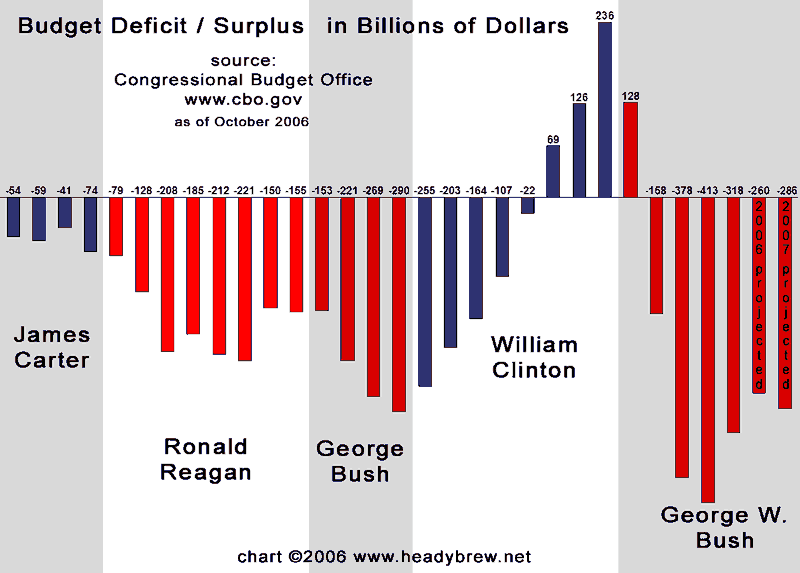
The political struggle over the nation’s debt, for Republicans anyway, is a battle over government itself. At least since Reagan, Republicans have not really cared about deficits, not as a matter of fiscal principle or prudence anyway. Rather, they seek to wage internecine war against both the idea and reality of government and in this ideological battle the issue of deficits can be a useful weapon, especially if it can be linked somehow to the issue of taxes, which must always be cut. Revenues can never be understood, let alone experienced as a form of social investment. Creating and accumulating large deficits enables Republicans to call for, even demand large reductions in government spending and programs, regardless of their consequences. The strategy is referred to as starving the beast.


Republicans, of course, cloak themselves in the rhetoric of freedom and necessity and express concern about future generations. That the beast they would slay ultimately translates to the lives of American citizens, including some of the most vulnerable who depend on government social programs to which they enjoy legal, political, and moral entitlement, is irrelevant. Hatred of government is a disease with them. They loathe common purpose and project, especially when channeled through the state. Their hatred of government, it seems to me, is tantamount to hatred of country.


It’s time to rethink Republican ideology, aspirations, and rhetoric and ask: why do Republicans hate America? I would ask: why do Republicans hate their country, but I don’t think Republicans, crystallized in the so-called Tea Party, have any sense of belonging to, taking pride in, or sharing a greater common enterprise, that is, a country. Rather, they tend to worship at the altars of casino capitalism, this or that fundamentalist church and its social dogmas, and, perhaps most of all, the untrammeled self.


Consider the following. Republicans have suggested dismantling Medicare and would like to do the same to Social Security. These are two of the greatest public collective accomplishments in American history. Modest as they are when compared to many European countries, they have nonetheless provided generations of Americans with financial security and protected many of them from impoverishment. Yet it is the very success and popularity of these programs that incense Republicans such as Paul Ryan and fuel their furious determination to be rid of them. The same dynamic is at work in Republican hostility toward landmark Civil Rights legislation and protections, remarkable public achievements on behalf of racial equality, which they routinely seek to eliminate and portray as obsolete and infringements upon fundamental freedoms. Why do they hate America?


Republicans also regularly work to subvert America’s system of public education. They try to divert as many dollars as possible to charter schools and other mechanisms that privatize secondary education. Chronic under funding enables Republicans perpetually to condemn the many shortcomings in American education that fiscal starvation itself helps create. Current financial crises allow them to fire teachers and invoke poorly performing schools as evidence that public education doesn’t work in the United States. As for state university systems, Republicans seek to convert them into corporatized spaces where education is reduced to mere instrumentality. Train, don’t educate. Reduce faculty (nothing but leftists anyway), enlarge classes, accelerate graduation schedules, and raise tuition rates so students won’t be such a drag on state budgets. It is the very success of public education (training future generations of citizens and professionals) that infuriates Republicans. Why do they hate America?


Republicans detest public transportation. Governors such as New Jersey’s Chris Christie refuse federal (stimulus) money for light rail and commuter trains in metropolitan areas that desperately need it. That investment in critical infrastructure would put people to work, relieve traffic congestion, benefit the environment, stimulate the economy, and make for a better future count as strikes against it. America’s greatest cities (New York being the most famous instance) would be unthinkable without vast networks of public transportation and other services, but Republicans detest cities such as New York and resent the public collective genius they represent. Why do they hate America?


You might think that the national landscape would be of concern to everyone. The United States possesses countless distinct natural wonders and the government enjoys responsibility to preserve them for generations to come. But rather than make them accessible to Americans to enjoy in common, Republicans would prefer to sell them to the highest bidder and see them developed for crass commercial gain. A form of public or common treasure must be converted into individual assets. As for protecting gifts of nature from pollution, the country from self-poisoning, and the planet from self-destruction, Republicans tend to be aggressively hostile—just drill, baby, drill. At times, this takes tragicomic forms. The House of Representatives recently passed a bill to prohibit funding a 2007 law increasing light bulb efficiency. One indignant Republican Congressman insists: “the federal government has no right to tell me or any other citizen what type of light bulb to use at home.” As for the Republican who authored the light bulb measure and secured its passage into law, he now opposes it. Why do Republicans hate America?


The only collective public activity that Republicans endorse is war, on behalf of which they suddenly become spendthrifts (prison-building has been another growth industry). They demand the right and power to exercise violence at will across the globe on behalf of the national interest. That habitual aggression and expansion leads to catastrophe not only for others but for the United States, as in Vietnam, Iraq and Afghanistan, seems to escape their notice—or, given its contribution to deficits, maybe not. And even in this domain protecting the national interest means guaranteeing the right of individuals to live lives of consumptive ease and abundance, assuming they can “earn” it, of course. Why do they hate America?


What, then, is America to Republicans? It’s a non-place where unencumbered individual (including corporate) interest reigns supreme, which requires for them the minimization, if not elimination, of government. This is not to suggest that a country should be equated with its government. It is to suggest that when Republicans express distaste for public life and institutions (including government), for collective aspirations and achievements, for service to the common good and a sense of social and civic solidarity, especially with those less blessed than they, they evince hatred of America.


News Corporation and American Democracy


John Buell
John Buell (jbuell@acadia.net) is a columnist for The Progressive Populist and a faculty adjunct at Cochise College. His most recent book, Politics, Religion, and Culture in an Anxious Age, will be published by Palgrave/Macmillan in August.

Will Rupert Murdoch's public humiliation end with the indictment of his son and deposing both as leaders of News Corporation? Murdoch is of course a larger than life figure, a modern day Citizen Kane, the movie character based in part on the life of the real media titan of his day, William Randolph Hearst. Hearst built a media empire through yellow journalism and relentless promotion of American empire. Murdoch has helped reshape modern media, not merely in terms of corporate consolidation or political leanings but also journalistic style and redefinition of the nature and limits of political argument. But though he has helped to define the role of media tycoon in the late twentieth and twenty first century, the evolution of capitalism and its political economy has itself reinforced and in turn been buttressed by his performance. Great actors inspire but also depend on engaged and receptive audiences.

Rupert Murdoch did not begin the process of media consolidation. A generation ago, media scholar and critic Ben Bagdikian highlighted the tendency of corporate media empires to achieve a high degree of both vertical and horizontal integration. (See his book, New Media Monopoly.) Diminishing numbers of corporate media controlled most of the market. In Britain, Murdoch has achieved an unprecedented degree of media consolidation.

That success of course owes something to Murdoch's ability to appeal to--and sow--the politics of backlash and jingoism. Murdoch had a cultural climate that proved receptive. The mainstream media of the sixties and seventies did indeed show some sympathy to growing concerns over racial justice and social issues. Radical critiques of corporate capitalism or sympathetic analyses of the plight of working class whites in an era of outsourcing, however, were hardly to be found. Murdoch had a perfect sweet spot to spread his right wing populism.


Murdoch's success has had other drivers as well. Like the large investment banks and defense contractors, he has depended on a symbiotic relationship with major political leaders. John Nichols points out: "Rupert Murdoch has manipulated not just the news but the news landscape of the United States for decades. He has done so by pressuring the Federal Communications Commission and Congress to alter the laws of the land and regulatory standards in order to give his media conglomerate an unfair advantage in 'competition' with more locally focused, more engaged and more responsible media. It's an old story: while Murdoch's Fox News hosts prattle on and on about their enthusiasm for the free market, they work for a firm that seeks to game the system so Murdoch's 'properties' are best positioned to monopolize the discourse." Murdoch is a prime example of the evolution of US capitalism toward a political economy that imposes market discipline on the poor even as it rewards and buttresses the power of the corporate winners and the wealthy.

Source: the Media Reform Information Center.

Nichols also asks if we should care about Murdoch's journalistic triumph. He suggests that the Murdoch scandal "raises huge questions about how news stories are and will be obtained in an era of new media and about the extent to which supposedly personal communications are private." These are certainly valid points, but a ruthless pursuit and exploitation of information about the private lives of its subjects has early precursors within the national security state itself. Think of J Edgar Hoover's accumulation of information about the sexual predilections of political leaders and his shameless deployment of these to bribe his nominal superiors.

Just as importantly, the corporate culture of News Corp reflected Murdoch's broader political ideals and affected its journalistic practices. Murdoch's notorious hostility to unions expressed itself in actions taken after high profile news takeovers at such papers as the New York Post and this in turn affected the editorial product. Michelle Chen comments: "Eavesdropping on voicemail or obtaining call logs was initially a money-saving measure" to get the scoop fast and cheap. That is, pressure to maximize profits contributed directly to the corruption of reporting practices." Reporters were subject to the same sort of speed up that shaped manufacturing assembly lines and still today is, as Harold Meyerson points out, a major driver of corporate profits even in the midst of the great recession.

More broadly, Murdoch feeds but also reflects a politics of demonization not unique to the United States but exceptionally potent here. Thus to a greater extent than in most modern democracies, such questions as whether one inhaled marijuana or had a mistress pass for informed and important political debate.

Fox reflects and amplifies another vital trend in the evolution of our politics. Naomi Klein's provocative Shock Doctrine suggests that the evolution of neoliberal capitalism with its market discipline for the many and rewards and subsidies for the well placed has depended on crisis. Thus 9/11 gave Bush extraordinary opportunities to reshape the economy and the national security state. Yet from my vantage point Klein underplays the role of the media in framing and fostering the sense of crisis. How is it that 9/11 evoked a far different response from the Oklahoma City bombing? A media that glorified Wall Street as the world's financial capital, that demonized Arabs, that viewed human history in Manichean terms played a crucial role.

The role of the media in shaping and defining crisis is even more obvious in the case of the current debt ceiling debate. The notion that the US is broke is absurd. If we are broke now, we were much more broke in the years following WWII. Yet in those years the US growth rate topped that of the Reagan era and the fruits of growth were much more equitably distributed. Nonetheless, Fox has been an amplification machine for the notion that the US is broke and government, just like today's families, must retrench. This analysis is only half right. Middle and working class families are broke, but the Federal Government can borrow money at historically low rates. If it does not borrow--or tax corporate and wealthy savings---and spend, we may be sunk.

Murdoch and his minions may face criminal charges. His singular ability to sense cultural vulnerabilities and ruthlessly to unearth and exploit personal failings or eccentricities has altered the media and political world. But neither our media nor our progressive politicians should indulge in anti-Murdoch vendettas and frame him as symbol and root of our troubles. True, he is an ideal villain and we love villains. But absent much stronger barriers to media consolidation and more opportunities for a diverse, citizen-journalist- and- consumer- directed media, where something other than advertiser dollars are the prime driver and motivation. Murdoch's demise will do us little good. Perhaps the role of the few remaining independent voices like the Guardian in exposing Murdoch and the truly ghastly practices to which News Corporation has stooped will help foster broad media and economic reform. (See http://www.democracynow.org/2011/7/21/murdoch_empire_pummelled_by_phone_hacking).

If progressives' only success is to punish or remove Rupert Murdoch, we may be disappointed. The larger political economy he represents may survive and even grow with his fall. Gwynne Dwyer points out: "There is something called the "Murdoch discount." It is the gap between the market value of News Corporation as it is, and the considerably larger sum that it would be worth without Rupert Murdoch at the helm. (Bloomberg estimates that it would be 50 percent higher.)" But what is good for News Corporation stockholders may not be good enough for us.