Impossible demands for "proof" in the Giffords assassination attempt

Louisiana State University


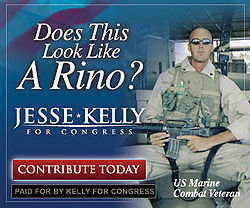
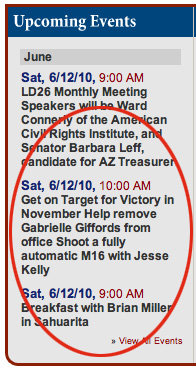
Although it was an utterly predictable response, I was still disappointed at the re-emergence of one aspect of the “lone nut” response to the Giffords assassination attempt: the erection of an impossible standard of proof in linking the alleged shooter to violent rightwing rhetoric and imagery. As if you can’t talk about the relation between violent rhetoric and violent acts without showing some direct causation. 
But what can you expect from blog comment threads, I told myself. Fighting the misguided and the trolls might give you an insight into the median winger blog commenter, or at least those brave enough to take the fight to the sort of leftie-liberal blogs I frequent, but it’s not going to do much more than give you a break between serious reading and writing your own work. 
But then I read this post over at Lawyers, Guns, and Money, and I realized that some social scientists, in trotting out that old show pony, the distinction between correlation and causality, might have a really impoverished view of “causality.” 
Here’s the post: 
January 10, 2011 | Charli Carpenter 
John Sides at the Monkey Cage weighs in with some social science on the relationship between militant metaphors in political speech and individuals’ willingness to engage in actual political violence against government officials. The findings he cites: an experimental study has shown there seems to be no effect on the overall population of exposure to “fighting words” in political ads, but there is an effect on people with aggressive tendencies. Moreover: 
This conditional relationship — between seeing violent ads and a predisposition to aggression — appears stronger among those under the age of 40 (vs. those older), men (vs. women), and Democrats (vs. Republicans).  


But his real point is that we should be cautious of inferring from this or any wider probabilistic data causation regarding a specific event: 
To prove that vitriol causes any particular act of violence, we cannot speak about “atmosphere.” We need to be able to demonstrate that vitriolic messages were actually heard and believed by the perpetrators of violence. That is a far harder thing to do. But absent such evidence, we are merely waving our hands at causation and preferring instead to treat the mere existence of vitriol and the mere existence of violence as implying some relationship between the two. 
I left the following response at LGM: 
So that’s it, a binary between “hand waving” and billiard ball causality? Somebody’s got a terribly impoverished view of “causality” here. I’d say it was an example of “physics envy” but contemporary physicists aren’t that crude. 
Let me give an analogy to a well-known biological principle, Schmalhausen’s Law, to show that we can make sense of the interchange of environment and population w/o meeting an impossible billiard ball causality standard. Schmalhausen showed that in species-typical environments, developmental robustness hides a lot of genetic variation. In other words, in normal environments you can get roughly the same results in a population with genetic variance. But put that population under environmental stress and the previously hidden genetic variation shows up in a greater range of phenotypes. This is not “hand-waving” but neither does it adhere to an impossible physics-envy billiard ball causality standard. 
The analogy here of course, is that today’s political rhetoric environment is so extreme that we can plausibly suppose that it will expose the psychological variation in the population that would otherwise remain unexpressed. 
This is not hand-waving, and it shouldn’t be dismissed because it doesn’t match some ridiculous standard of a direct cause-and-effect of one statement to one act.
I went over to New APPS and made a post of it, where I got this interesting response by Scalinger: 

In fairness to Sides, and in keeping with your example: an extreme environment can “expose” variation only if members of the population are actually affected by it (by its extremes, moreover). So it's not out of place to ask whether the assassin ever actually saw or heard violent messages. I don't see any physics envy in that.

My reply: 
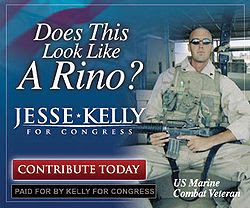
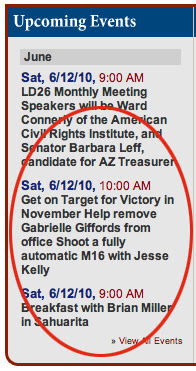
Yes, that's fair to ask. The exposure to the rhetoric part is easy, given what we know even now. The shooter was described as "obsessed" with Giffords, he attended one of her rallies in 2007, she won her election by 3500 votes against a candidate whose campaign had all sorts of violent images. It's a vanishingly small probability that he wasn't exposed at some point to these sorts of things. 
Now as to Sides' second requirement, "belief," we're a lot closer to unilinear causality than I'm comfortable with. We have to prove that he had a representation with the content "Giffords must be eliminated" and that we can trace that representation to an event or series of events at time T1…Tn (the exposure to a particular message or set of messages)? So that this representation with that content (plus some other representation) are then the necessary and sufficient conditions for his action? That's not physics envy? 

OK, maybe he has a more sophisticated psychology than that, though it's hard to tell from his post. And it's certainly no good on my part to just chant "nonlinear dynamics" as a mantra so that anything goes in linking environment and shooter. 
But there has to be something along the lines of dispositions and thresholds that's better for thinking this case than the sort of linear belief-desire-action scheme he seems to be proposing (what Susan Hurley memorably mocked as part of the "classical sandwich" view: sensory input -- computation on representatons -- motor output). 

In this nonetheless heartfelt piece, Jon Stewart displays the same exclusive binary to which I object: either we can show a straight line causality or we can't make any sense out of a "complex ecosystem." So it's either a coherent ideological act (message – belief – action) or it's "senseless," it's "lunacy." But there are other forms of causation than straight line efficient causality, for example, the sort of environmental pressure causing increased phenotypic variance that Schmalhausen's Law describes. I hope we can say something analogous about the relation between the Giffords shooting and the extreme political rhetoric and images of Tucson Arizona without it being mere correlational "hand-waving." And actually I think Stewart's "toxic environment" trope is a good place to start.
The Daily Show With Jon StewartMon - Thurs 11p / 10c
Arizona Shootings Reaction
www.thedailyshow.com
Daily Show Full EpisodesPolitical Humor & Satire Blog</a>The Daily Show on Facebook

To wrap this up, it seems to me that this billiard-ball-causality view has a lot in common with the isolated libertarian subject. Libertarians, I think, have to deny corporate advertising effects on the formation of choices, since that’s their bedrock, the individual and a consistent preference set. So they will deny any cultural influences and the porous subject that goes along with that. So there’s the isolated hard-shell individual (the billiard ball), and the only thing that will influence it, short of literally banging into it with a real billiard ball, is direct gun-to-the-head government coercion. Hence their refrain in pushing the “taxation is theft” line: "men with guns will come to your house and make you pay taxes!" This impoverished view of causality seems to be what’s behind many demands for “proof” in the Giffords case.
Where the Real Threat Lies: Julian Assange and the Politics of Assassination

Steven Johnston
University of South Florida

On October 9, 2009, Barack Obama was awarded the Nobel Peace Prize “for his extraordinary efforts to strengthen international diplomacy and cooperation between peoples.” Two months later Obama announced, before an audience of West Point cadets, that the United States would deploy an additional 30,000 troops to Afghanistan, an escalation of a lost war. This is also the president who refused to end the practice of rendition, effectively continuing the policy of torture begun by the Bush-Cheney Gang. This is the president who thinks he has the right to order the execution of American citizens abroad. This is the president whose diplomacy has failed to halt Israeli colonialism in Palestinian lands. This is the president whose diplomacy has done nothing meaningful to address nuclear weapons in the Gulf region, which includes Israel and not just Iran. 
One might object to the Nobel Committee’s decision regarding Obama. After all, he doesn’t (and never will) belong in the company of prior winners such as Martin Luther King, Amnesty International, Médecins Sans Frontières, International Campaign to Ban Landmines, Lech Walesa, Desmond Tutu, Nelson Mandela, and the International Committee of the Red Cross. If Reggie Bush has to forfeit his Heisman Trophy, how does Obama retain his Nobel Prize? 
One might also say nothing about the Nobel Committee’s decision. After all, the Committee forever discredited itself in 1973 when it awarded the prize to the poster boy of war criminals, Henry Kissinger. This was followed by future awards to thugs and terrorists like Anwar Sadat, Menachem Begin and Yasser Arafat. It’s a small wonder, in fact, that the Nobel Peace Prize hasn’t expired due to international scorn and derision. 
Since it hasn’t, I would like to propose a candidate for the 2011 peace prize: Julian Assange. Thanks to the mass circulation of classified government documents, the “founder” of WikiLeaks has become the obsession of the United States and other world powers, driving them to fits of righteous indignation. Representative Peter King of New York (R) claimed the leaks were “worse even than a physical attack on Americans, it’s worse than a military attack.” King has demanded prosecution under the 1917 Espionage Act (a World War I legislative tool designed to crush dissent) and would like to see the State Department declare WikiLeaks a terrorist organization. Eric Holder’s Justice Department is more than happy to comply, if it can. Not to be outdone, Sarah Palin, would-be presidential candidate, offered a post on Facebook in which she equated Assange with al-Qaeda and declared him “an anti-American operative with blood on his hands.” Palin asks rhetorically, if also indirectly, why Assange hasn’t been targeted for assassination. The Wall Street Journal likewise called for his summary death, invoking the Chinese and Russians as models who would know exactly what to do in such a situation. 
Palin’s accusation, made by many others as well, that Assange’s hands are covered in blood betrays a certain anxiety. The sovereign state does not tolerate, let alone appreciate, political rivals, perhaps especially “a solitary man armed only with computer equipment” (to quote Investor’s Business Daily) taking on such a civic role and responsibility. It reserves to itself the right to kill or let live and the United States in particular, which includes the Nobel Prize winner currently occupying the White House, has much blood on its hands—not enough, of course, for the Peter Kings and Sarah Palins of the world, but more than enough to reveal the absurdity of the patriotic libel made against Assange. If anything, the greatest testimony to Assange’s contributions to peace and qualifications for the Nobel Prize come from those who would see him dead. 
Assange’s aim: a more just world. Leaking is a question of political responsibility, of what it means to be a citizen, in this case, a global citizen or a citizen with a cosmopolitan ethos. By “publishing” government documents, which can reveal, among other things, the discrepancy between public policies and private assessments of those policies, between what governments say they are doing and accomplishing and what they are actually doing and accomplishing, Assange would force governments to pursue different foreign and domestic initiatives. Failing that, he would force governments and their agencies, such as those that constitute the American National Security State, to close ranks and tighten security protocols governing the handling and sharing of secret and sensitive information. Insofar as such sharing has been deemed essential for a state’s military-security apparatus to function at full capacity, sustained leaks might deal it a severe operational strike. True, Assange would deal a blow to the heart of the American empire, but he has other hegemonic states in his sights as well. This does not make him anti-American; nor does it render him anti-Chinese or anti-Russian; it makes him pro-democracy. 
The United States aspires to a monopoly on WikiLeaks outrage and this may be due to Assange’s impertinence as much as to his exposés. Investor’s Business Daily, for example, cites the humiliation Assange has inflicted on the “mighty” United States—again. Of course, the United States is all too familiar with humiliation; it’s at the heart of the Vietnam Syndrome, which continues to haunt the exercise of American military power and its patriotic culture. Supposedly exorcised in the first Gulf War, it returned with a vengeance with George Bush’s failure to conquer and remake the Middle East in America’s image. The United States now has two failed wars to its credit in the first decade of the 21st century. Unlike the Pentagon Papers, which shocked the United States public with systematic official deception, the WikiLeaks documents pertaining to Afghanistan (including prior postings) remind of us of truths already well known and the subject of a kind of willful denial. No sovereign state likes being called on its ongoing failures, especially in the realm of war. The WikiLeaks cache serves as an official reminder of American impotence and, in theory, might contribute to formal criminal charges before international bodies. Kissinger and Nixon waged the Vietnam War for four needless years knowing the outcome had already been decided. The United States obtained the same peace arrangement in 1973 it could have secured in 1969. Obama is repeating the strategy in Afghanistan. More than likely he will be a one-term president; it’s a shame it will be the result of failed economic and fiscal policies (themselves the result of a failure of political will) rather than a principled stand to end a lost war. Too bad he lacks the courage of Julian Assange.

Retirement, Social Security, and Culture Wars

John Buell
Author of Evil Doers: Demonization and the End of Civil Debate in American Politics (NYU Press)

The current Social Security debate reflects one of the great paradoxes of US politics. Months after Social Security helped save the economy from complete collapse, the program suddenly became unaffordable. Conservatives of course, from the New Deal on, have despised this program. It is universal and has benefited not only the poor but most middle class citizens as well. Conservatives also suspect it’s a Trojan horse that might well encourage strengthening other universal programs, like health care or college education for all. Combating this strange and paradoxical attack, however, requires consideration of the culture as well as the economics of Social Security. Social Security is part of our broader cultural wars. Some of the most widely discussed “reforms” of the system reflect insensitivity toward or even disdain for the poor, for manual workers, and anyone who values leisure over our work and spend culture. 
The weakness of the economic case against Social Security is obvious and has been meticulously documented by Dean Baker. The cultural implications of the debate have received less attention. Over many years the trust fund has taken in more in taxation than it has paid in benefits. The surplus has been invested in government bonds and the government has used the funds for other purposes, including tax cuts for the rich. The rich in turn have used some of their money to buy stocks and government bonds. Workers have been prepaying for their own retirement. Indeed, since the cap on income taxed for retirement has been relatively low, the tax is regressive. No wonder Warren Buffett’s secretary pays a larger percentage of her income in taxes than does her boss. 
Now that the baby boomers are starting to retire, government may need to draw on the fund by cashing in its bonds and sending some of the proceeds to the folks who funded the bond purchases in the first place. But having made such a stink over profligate government as the cause of our economic woes, there are anguished demands to reign in the promises made to workers. The most discussed idea now seems to be an increase in age at which full retirement benefits become available. 
Mainstream media insist that demanding government meet its fiscal obligations to the Social Security trust fund may be unfair or unrealistic. But turn the tables around. What if a left-of-center government took power and said that in the light of its purported fiscal crisis it would be unfair or unrealistic for government to pay those wealthy bondholders the full principal on their bonds at maturity. I can already hear screams about the moral irresponsibility and dire consequences of such a default. 
And what is the cultural message in the reforms, aka default, citizens are being asked to accept? What is the big deal in being asked to retire at 67 instead of 65? Such a demand is hardly class neutral. I look at my own situation as compared to friends and acquaintances in this working class, waterfront community. One part- time lobsterman, nearing 65, survives by hauling wood, moving, storing and painting docks during the winter. He endures chronic back pain and has suffered a heart attack. Another electrician friend crawls around in attic enclosures I can’t imagine even being able to squeeze into. His pension decimated by the housing and financial meltdowns, he counts on Social Security as his one refuge. Now, however, convinced by the media that Social Security is bankrupt, he laments “I am never going to be able to retire.” 
I am sixty- five. I love the work I do, which includes writing op ed columns and books as well as teaching online college courses. I look forward to every day of work and have no intention of retiring as long as I can still breathe. I suspect Pete Peterson, the billionaire anti social security guru, feels the same way.
Despite all the talk of the US as a post industrial society nearly half of workers over age 58 work at jobs that are either physically demanding or involve difficult work conditions. And a disproportionate number of those depend most heavily on Social Security. They have every right to demand that government not welch on its obligation to them 
 Life expectancy has increased, but so has the economy’s overall productivity. More broadly, the great promise of capitalism from at least the 1950s has been the claim hard work, savings, and reinvestment would foster technological advance enabling more leisure. Citizens would then have the right to choose how the benefits of increased productivity should be allocated. 
The French still keep alive a part of the capitalist promise that is ridiculed or indefinitely deferred by elites in Europe and especially here in the US. Despite efforts by European and US media to portray public sector workers as greedy or unrealistic, the great majority of French citizens recognize that all workers have a cultural and economic stake in opposing President Sarkozy’s efforts to increase the retirement age for state employees. If Sarkozy succeeds, his actions, much like President Reagan’s attack on the air traffic controllers, will encourage broader attacks on the working class. Mark Weisbrodt of the Center for Economic and Policy Research argues: “It is, therefore, perfectly reasonable to expect that as life expectancy increases, workers should be able to spend more of their lives in retirement. And that is what most French citizens expect. They may not have seen all the arithmetic, but they grasp intuitively that as a country grows richer year after year, they should not have to spend more of their lives working.” 
Corporate capitalism, American style, has never been as simple, complete, and linear as its advocates imagine. Even its successes have opened up new rights claims its fundamentalist advocates disparage or deny. 
Leisure is an especially compelling claim, both for its own sake as a space for other transformational possibilities in our personal and collective lives. Both Pete Peterson and the electricians and boat hands that sustain his affluent life should have the right to leisure and a comfortable retirement. No expert commission should usurp this right.